Logo
Expeditions
OpenPrivateOrganizations
Blog
About
Expeditions
OpenPrivateOrganizations
BlogAbout

Home

Open

Private

Organizational

About

Blog

Newsletter

Terms

Privacy Policy

Code of Conduct

Contact us

Subscribe to get the latest news

Follow us online

© Copyright Essential History Expeditions 2026. All rights reserved.

THE GREAT WAR

AMERICANS IN WORLD WAR I

May 8-17, 2028

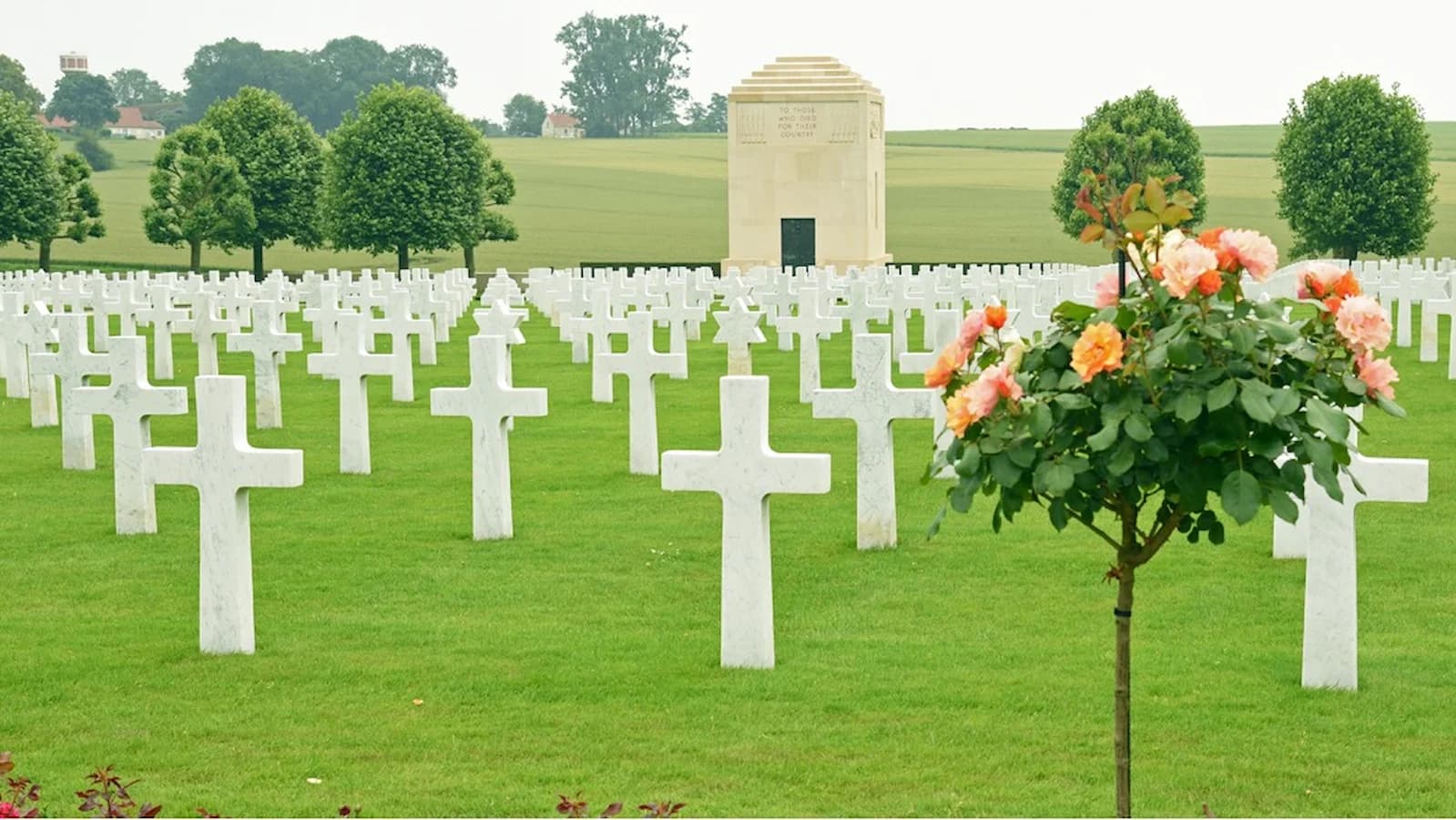
Chapel at the Meuse-Argonne American Cemetery, the largest American cemetery in Europe. A solemn tribute to the soldiers who fought in the final offensive of World War I, visited on our Great War: Americans in World War I expedition.

Overview

THE GREAT WAR: AMERICANS IN WORLD WAR I

May 8-17, 2028


It has been 110 years since the guns fell silent and World War I ended. Still, the events of that era continue to shape and affect our world today. Four major monarchies and empires collapsed in history’s greatest shift in European and world power. The United States and the Soviet Union became major global players out of the ashes. The new map of the world created from the war continues to have significant impact on current events.


The war had been underway for nearly three years when the United States entered WWI on the Allied side in April 1917. However, it would be another year until the American forces finally made their impact on the battlefield. And it was a decisive impact that demonstrated the unflinching resolve of freedom-loving peoples and brought an end to the bloodiest conflict in human history to that point. If your mind is set on a belief that World War I was nothing but static trench warfare and no movement, you will be surprised to encounter the American fighting forces involved in one great maneuver offensive after another. We now, at the centennial plus ten, have the incredible opportunity to follow in the footsteps of these young Americans in the Great War tour.


This America in World War I history tour will bring guests to the verdant fields; and villages, towns and cities where the youth of America made their most indelible mark. From the Big Red One in the first fight at Cantigny, to the Marines at Belleau Wood; from American infantrymen assaulting the lines at St Quentin Canal and the St Mihiel Salient, to the largest battle in American history in the Meuse-Argonne. From the story of the Lost Battalion, to Sergeant York’s exploits, to the four Roosevelt brothers, and so many other iconic stories and sites. We will also pay respect to our allies by visiting the British battles at Mons and Ieper/Passchendaele, the Canadians at Vimy Ridge, the Australians in the Somme and the French at Verdun.


The World War I history tour unfolds over ten days with stories of all the allied participants as well as those of the German defenders. In addition, Essential History Expeditions guests will visit amazing heritage sites in the regions where the Americans fought, including:


  • Ieper/Ypres: the Flemish town that saw non-stop fighting from 1914 through 1918. Its famed Cloth Hall and Menin Gate Ceremony will inspire you. For the British, there is no more sacred place in all the war. Four American divisions fought here in the summer and fall of 1918.


  • Reims: the city of Kings! And the capital of Champagne! In its great Cathedral Notre-Dame de Reims nearly every French monarch was crowned over the long centuries. We will also visit Eisenhower’s final WWII headquarters, including the map room where the Germans surrendered to the Western Allies on May 7, 1945 (V-E Day!).


  • Verdun: the epicenter of one of the greatest battles in history, and long the fortress that blocked the way to Paris. We will visit several sites of the 1915-16 battle.


  • Compiegne: where the Germans surrendered in WWI and the French initially surrendered in WWII. It is also an amazing small city of rich history including the capture of Joan of Arc, and where Louis XIV and the two Napoleons had chateaux and palaces.


The rich farmland, the quaint villages and the dramatic hills and forests of France create an incredibly memorable backdrop for this World War I history tour.

Inclusions

  • Nine nights boutique/luxury accommodations in all 4-star and 5-star hotel (best available in each location).
  • In-depth guided tours with professional historian.
  • Full-time tour director for personalized support.
  • Visit local Belgian and French cultural/historical sites.
  • Transportation by luxury bus throughout trip.
  • Group and on own meals, as indicated in the itinerary. Alcohol is excluded.
  • One bottle of water per day per person.
  • All entrance fees for group activities.
  • Gratuities for docents and restaurants.
  • Itinerary subject to slight changes.

Exclusions

  • Flights to/from Europe.
  • Airport transfers.
  • Alcohol, unless specifically included in the itinerary.

Please note that our expedition begins in Brussels and ends in Paris.

Pricing

Reserve your space on this expedition with a deposit of $1,000 per person today!

  • Per person pricing will be available on this page 12-18 months before the expedition start date.
  • We will contact reserved guests when we have released updated trip pricing.
  • You may cancel or update your booking with no penalty when we release trip pricing.
  • All deposits will be applied to your final invoice.

your expedition leaders

more european expedition dates

$1,000 per person

StartMay 8, 2028
EndMay 17, 2028
Book Now

$1,000 per person

Book Now

Expedition Itinerary

  • Monday, May 8, 2028

    • Meet at 1pm at the Marriott Grand Place hotel, with an opening lunch, introductions to the expedition and each other.
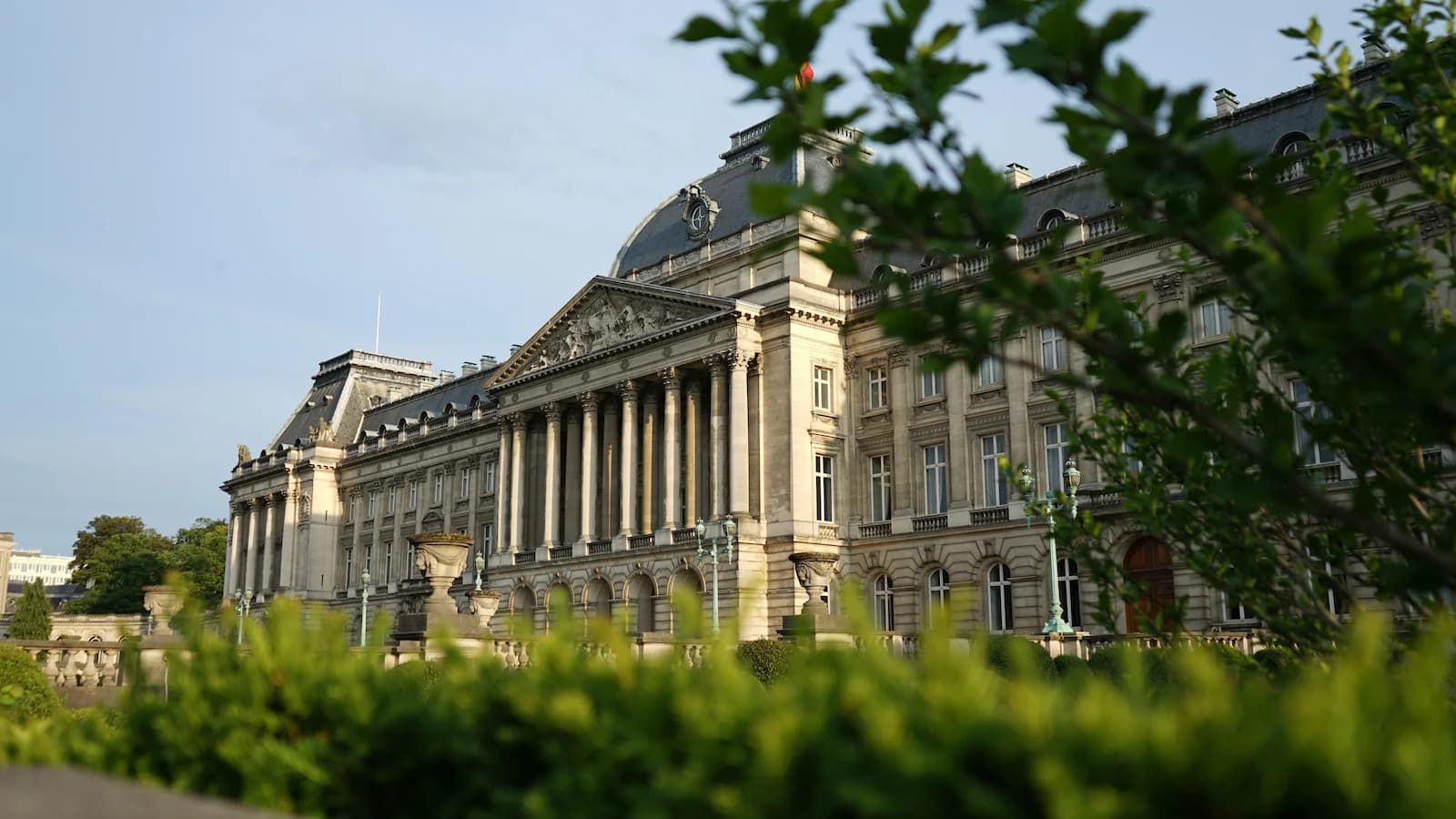
    • Walking tour of central Brussels, the capital of Belgium. Occupied by the Germans throughout most of the war, today it is home to the European Union and NATO, among other international institutions. We will walk by the Royal Palace, Grand Place, the Mannekin Pis and more.
    • Social hour (optional) and dinner on your own in central Brussels.
    • Hotel: Marriott Grand Place in Brussels (or similar).
Product photo

Dr. Brian DeToy

EHE President & Co-Founder

Product photo

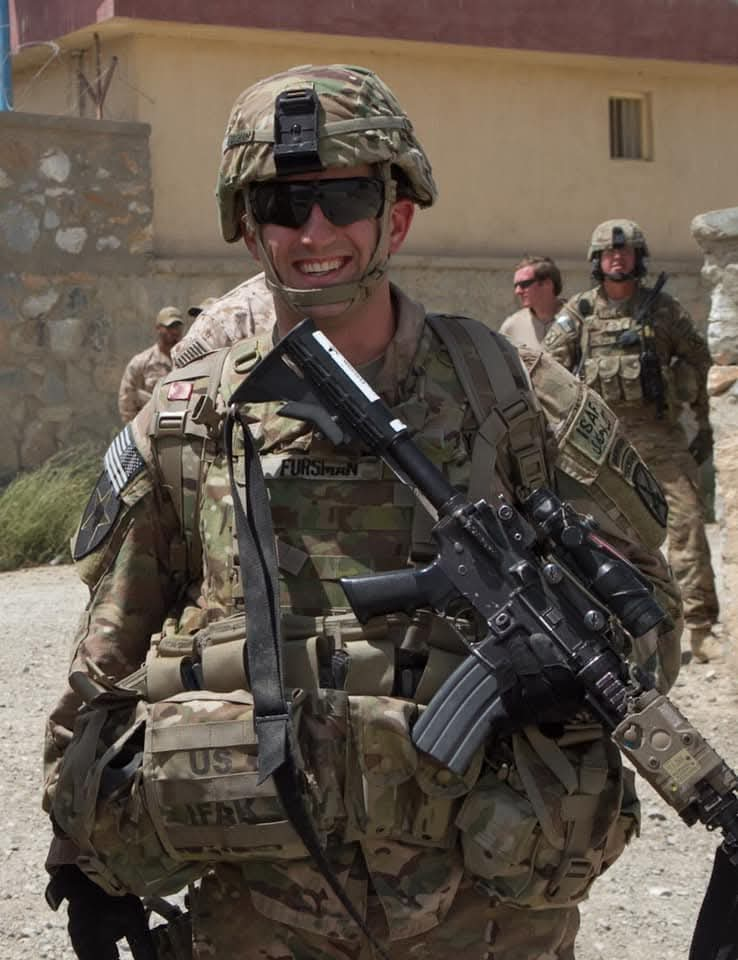
Jonathan Fursman

Expedition Director

Dr. Brian DeToy

Expert historian and expedition guide, Brian is a retired U.S. Army Infantry Officer who graduated from the University of Notre Dame with a BA in History and holds a PhD from Florida State University in European History.


While on active duty, he served as Director of the Defense & Strategic Studies program at the United States Military Academy, West Point, Assistant Professor in the Academy’s History Department, Chief of Research and Publications in the Combat Studies Institute at Fort Leavenworth, Kansas, and Professor of Military Science at the University of Kansas. He also served as the theater Command Historian for the Multi-National Corps-Iraq out of Baghdad.


Brian draws on his deep knowledge of military history and experience in the field to give EHE guests the most in-depth, personal look at not only the lessons of historical battles around the world but the cultures of the people who fought them.

Product photo

Dr. Brian DeToy

EHE President & Co-Founder

Product photo

Jonathan Fursman

Expedition Director

Jonathan Fursman

Jonathan is a retired U.S. Army Infantry officer who commissioned out of Cornell Army ROTC with a BA in Government. Jon also holds a Master of Public Policy from The George Washington University.


On active duty, Jon deployed as a combat leader to Iraq and Afghanistan multiple times, including as a rifle company commander in Baghdad in 2007. He was also an Assistant Professor of Defense & Strategic Studies at the United States Military Academy, West Point, NY for three years where he became an expert at leading staff rides. He later worked in Strategic Plans & Policy at U.S. Africa Command, commanded a Stryker infantry battalion, and served in the Republic of Korea for four years.


Today, he blends his professional military and teaching experience with his education in military strategy and public policy to deliver unique, thoughtful expeditions for EHE guests around the world.

Expedition types

Open Expeditions

Join a scheduled expedition

Private Expeditions

We custom build your expedition

Organizational Expeditions

Meet your mission

Contact Us
Royal Palace of Brussels, a key landmark visited during Essential History Expeditions’ World War I tour of Belgium and the Western Front.

Tuesday, May 9, 2028

  • Breakfast, check-out and depart lodgings.
  • Drive to Passchendaele. Visit the museum and its trench system. Examine the ill-fated 3rd battle of Ypres in autumn 1917. Probably no battle in all the war captured the futility of the conflict. On your own lunch at the museum café.
  • Visit other parts of the battlefields near Ieper/Ypres, including St Julian, Langemark (and its German cemetery), and Hill 60. Three battles for this Belgian town (the last is sometimes called Passchendaele, as well) were some of the bloodiest and hardest fought of the war. Visit Essex Farm British cemetery, where John McCrae (of “In Flanders Fields” poem fame) is buried.
  • Social hour (optional) and dinner on your own in Ieper.
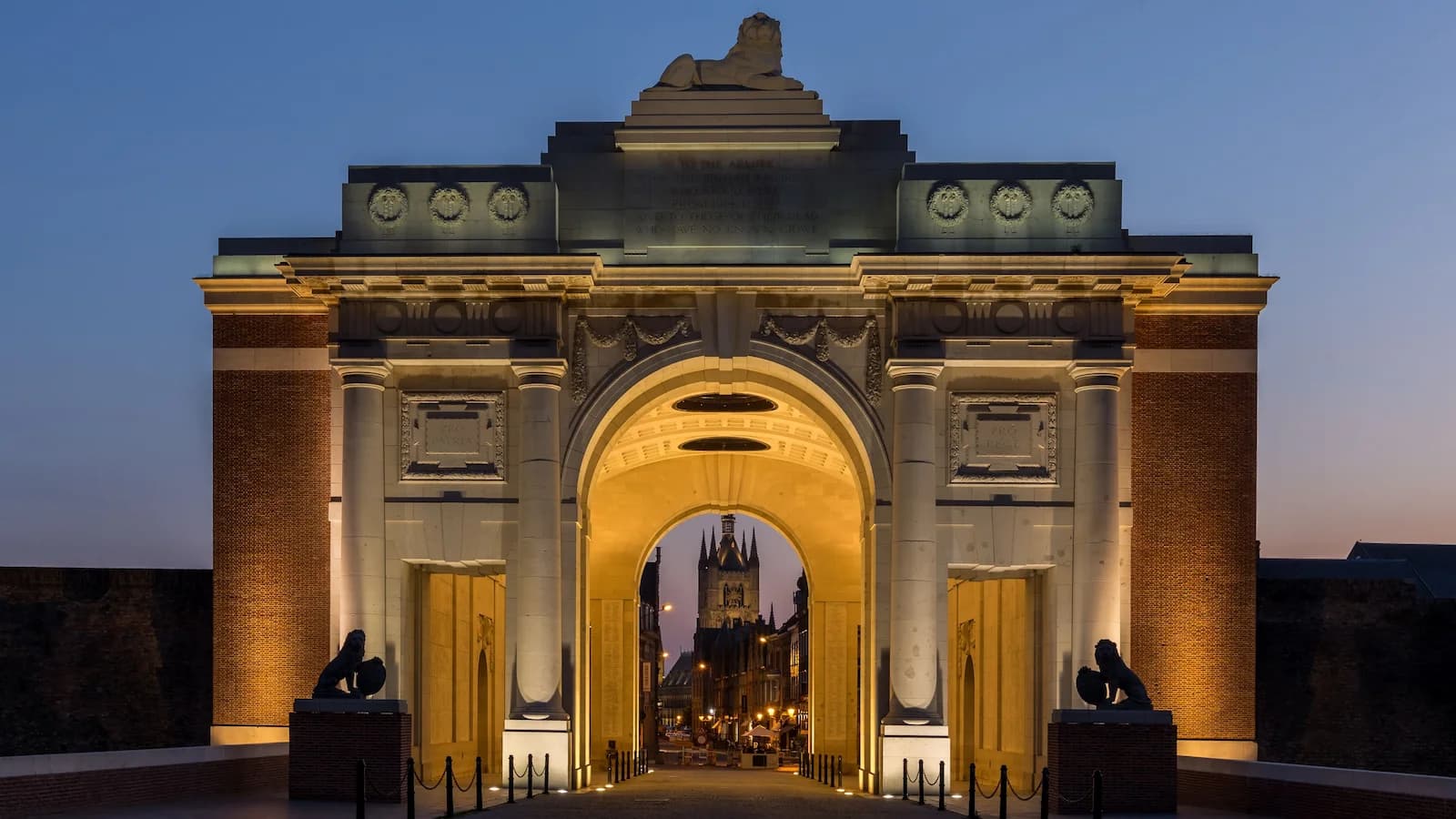
  • Attend 8pm ceremony at the Menin Gate for the soldiers of Ypres (a nightly tradition for 100 years).
  • Hotel: Ariane Hotel in Ieper (or similar).
The Menin Gate Memorial in Ypres, Belgium, inscribed with the names of over 54,000 British and Commonwealth soldiers who have no known grave. The nightly Last Post ceremony has been held here for a century.

Wednesday, May 10, 2028

  • Breakfast, check-out and depart lodgings.
  • Visit sites associated with the siege of Ieper, including American actions near Kemmel and Messines Ridge (scenes of some of the largest mine warfare in the entire conflict).
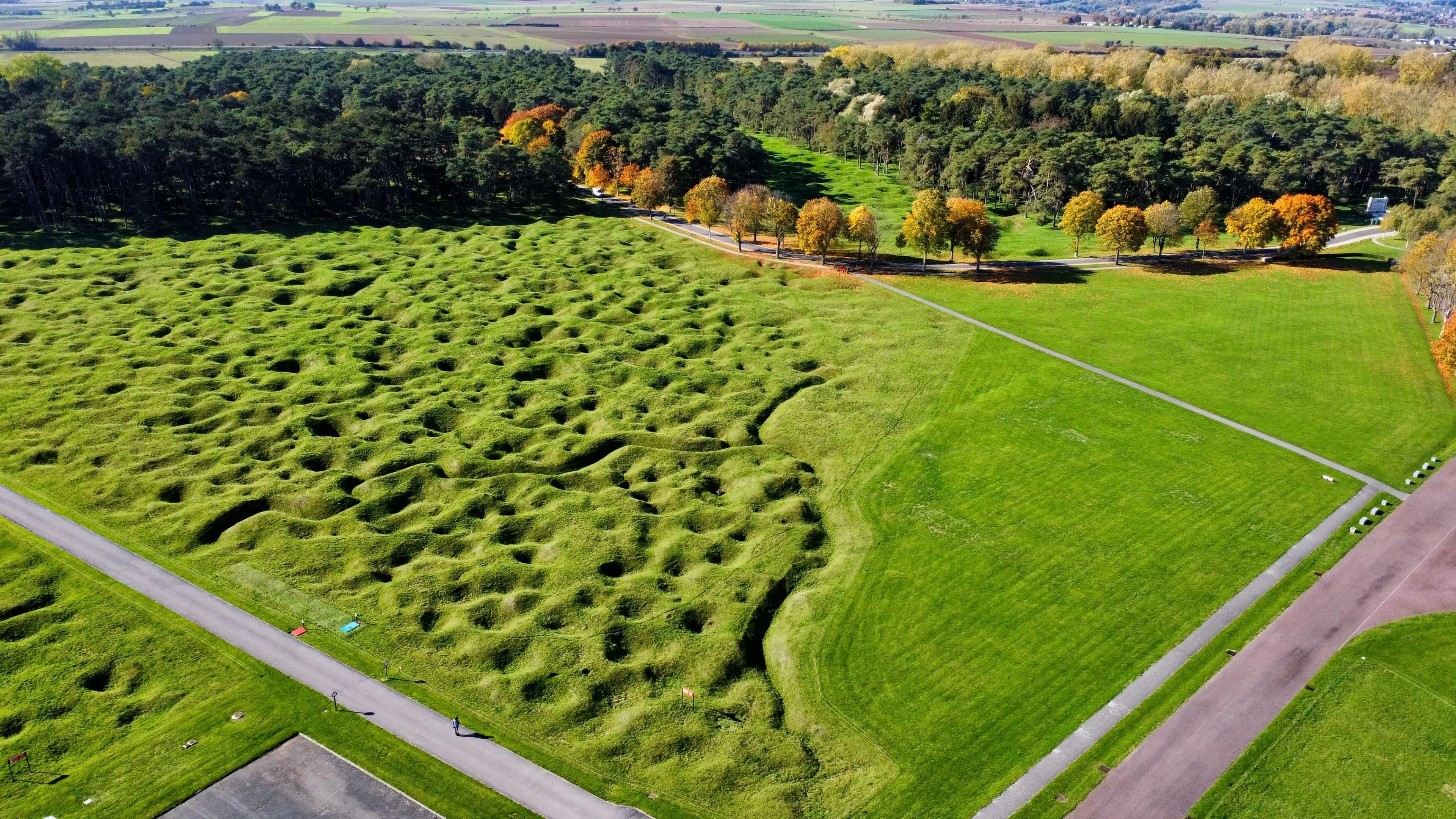
  • Drive to Vimy Ridge Canadian Memorial, one of the most moving national monuments anywhere. Discuss the battle that helped establish Canadian national consciousness.
  • Lunch on your own in central Arras, where restaurants are plentiful.
  • Afternoon visit of the huge underground barracks complex of Carriere Wellington Underground Tunnels and subterranean warfare.
  • Social hour (optional) and group dinner in Arras at The Albatross Restaurant at the Fairway.
  • Hotel: The Fairway in Arras (or similar).
Preserved battlefield landscape at Vimy Ridge, France. Site of the famous Canadian victory in April 1917 and home to one of the most striking national memorials on the Western Front.

Thursday, May 11, 2028

  • Breakfast, check-out and depart lodgings.
  • First, we drive to and visit Cantigny – site of the Americans’ first battle, May 1918, where the 1st Infantry Division (the “Big Red One”) helped stem the major German Spring Offensive that is designed to end the war!
  • Next up is the Somme – site of the incredible offensive in July 1916, the defining moment of the British participation in the Great War. Over 57,000 British soldiers fall as casualties the first day, as do an additional 14,000 French and Germans. But the weight of this attack, in combination with the intense fighting going on simultaneously at Verdun, leads the Germans to make strategic errors that bring the Americans into the war. Our focus will be on the 1918 Australian battle at Villers-Bretonneux. The incredible Australian National Memorial is located here, as well.
  • Box lunch in the nearby town of Aubigny, outside of which Manfred von Richthofen, the Red Baron, was shot down and killed in April 1918.
  • Drive to and visit the battlefields along the St Quentin Canal (September-October 1918) – the Americans, alongside Australian and other British troops, break through the Hindenburg Line in the last months of the war, turning the stalemate into a race toward Germany.
  • Visit the Somme American Cemetery, where the first American officer killed in the war is buried (Lieutenant Fitzsimmons – the famed Denver hospital is named for him).
  • Continue on to Reims.
  • Social hour (optional) and dinner on your own in central Reims.
  • Hotel: La Caserne Chanzy Hotel & Spa, Marriott Autograph Collection (or similar).
Bony American Cemetery (Somme American Cemetery), final resting place of American soldiers who fell in the battles along the Hindenburg Line and Somme sector in 1918.

Friday, May 12, 2028

  • Breakfast
  • In Belleau Wood (June 1918) – we will see the 2nd Infantry Division and its attached Marines counterattack into the thick forest where the Germans have approached near the Marne. To this day it remains sacred ground for the “Devil Dog” Marines.
  • We will visit the American Aisne-Marne Cemetery at Belleau Wood.
  • Chateau-Thierry (May-July 1918) – The 3rd Infantry Division (the “Rock of the Marne”) stops the German attack and the tide of the battle shifts to the allies. This is a major turning point.
  • Lunch on your own in Chateau-Thierry.
  • Return to Reims.
  • Walking tour of the central city, one of the most famous and beautiful in France, including the Cathedral Notre-Dame de Reims, which played an important ceremonial role in French monarchical history as the traditional site of the crowning of the kings of France.
  • We will visit the Musée la Reddition (WWII Surrender Museum), a former school building, where the Germans surrendered to Eisenhower on May 8, 1945, in the map room that remains set as it was on that day!
  • The capital of one of the world’s greatest wine regions, Reims is home to numerous iconic champagne houses, and we will have a tour and tasting at one of the famous cellars.
  • Dinner on your own in one of the many wonderful restaurants in Reims.
  • Hotel: La Caserne Chanzy Hotel & Spa, Marriott Autograph Collection.
Belleau Wood, France is sacred ground where U.S. Marines earned the nickname “Devil Dogs” during their fierce counterattack in June 1918. A highlight of our American involvement in World War I tour.
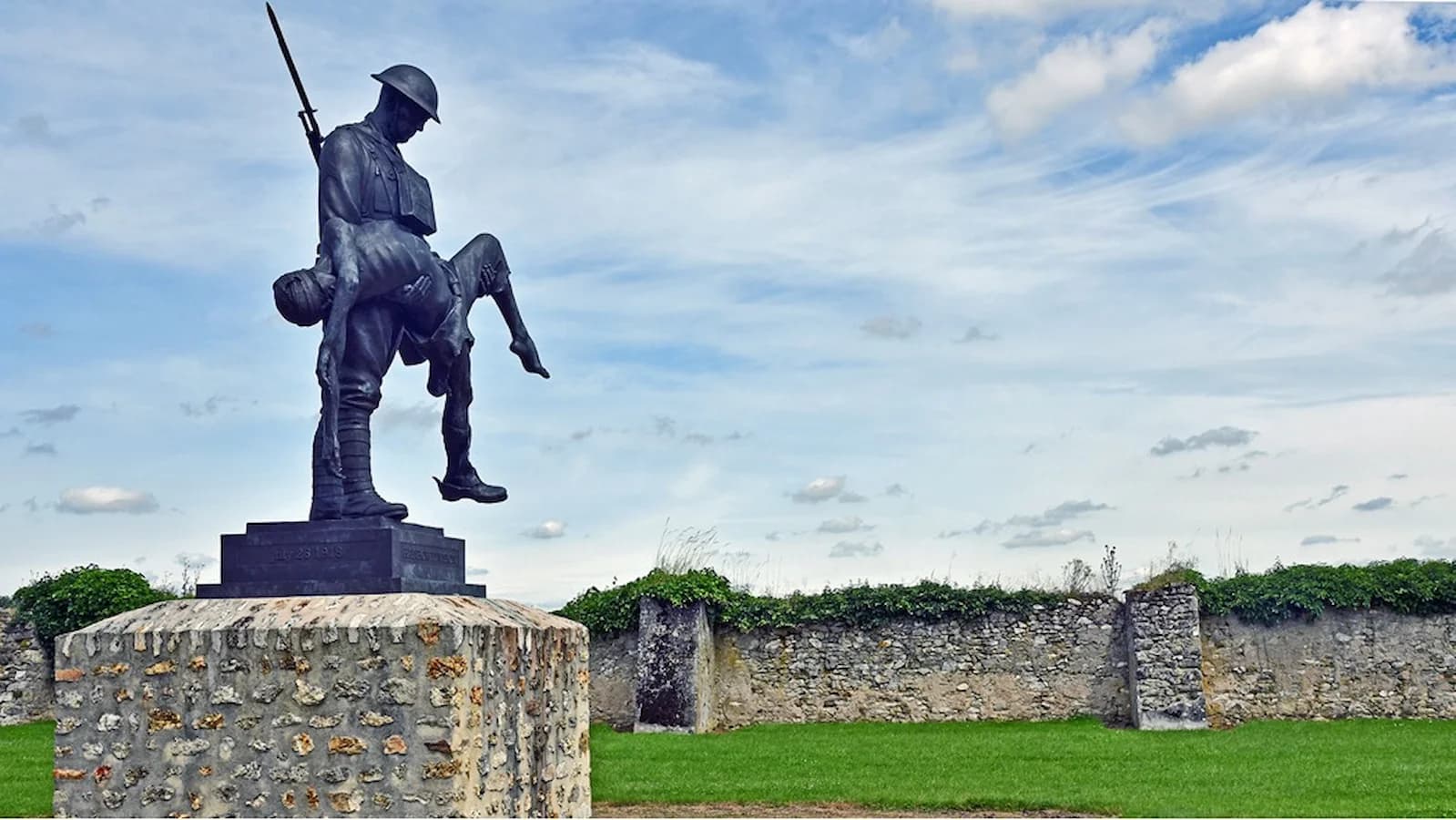
The American Monument at Chateau-Thierry, France, commemorating the U.S. defense of the Marne River in 1918. A key location during the Aisne-Marne Offensive.

Saturday, May 13, 2028

  • Breakfast.
  • Aisne-Marne and Oise-Aisne offensives (July-September 1918) – the Americans’ first major corps-size attacks drive the Germans back in the summer of 1918. These are slogging battles that see the Americans push deep into the German lines. One of the major assault units is MacArthur’s 42d Infantry (the “Rainbow Division”) and we will follow its advance, including a visit to the famed Croix Rouge Farm where lies the division’s moving memorial. We will have a boxed lunch on the battlefield this day.
  • At Mezy Moulins, we will see where the allies begin their counteroffensive in July 1918. This where the famed Third Division earned its name, “The Rock of the Marne.”
  • After Croix Rouge, we visit the small village of Chamery and the Roosevelt Family memorial fountain, placed in honor of their son, Quentin, an Army pilot shot down and killed nearby in July 1918.
  • We will explore the moving Oise-Aisne American Cemetery.
  • Then we visit the Butte de Chalmont, an impressive hilltop monument that commemorates the Allied victory in the battles of 1918. Chalmont’s main artistic design is a collection of fantomes (ghosts) that represent those lost in war. Box lunch in the park.
  • Next, we will visit the riverside towns of Fismes and Fismettes, scenes of some of the bloodiest urban fighting of the war, where the American 28th Division fought German stormtroopers to a standstill.
  • Return to Reims.
  • Dinner on your own in Reims.
  • Hotel: La Caserne Chanzy Hotel & Spa, Marriott Autograph Collection.
The 42nd “Rainbow” Division Memorial at Croix Rouge Farm, site of intense fighting during the Aisne-Marne Offensive in July 1918.

Sunday, May 14, 2028

  • Breakfast, check-out and depart lodgings.
  • We will head to Verdun with stops at two battlefields enroute.
  • First up is the battle of Mont Blanc Ridge, that occurred 3-27 October 1918. Here the American 2nd Infantry (Regular Army, with a Marine Brigade) and the 36th Infantry (Texas Army National Guard) divisions fought alongside the French 4th Army against a hardened German defensive position that had balked the Allies for years. The Americans captured it.
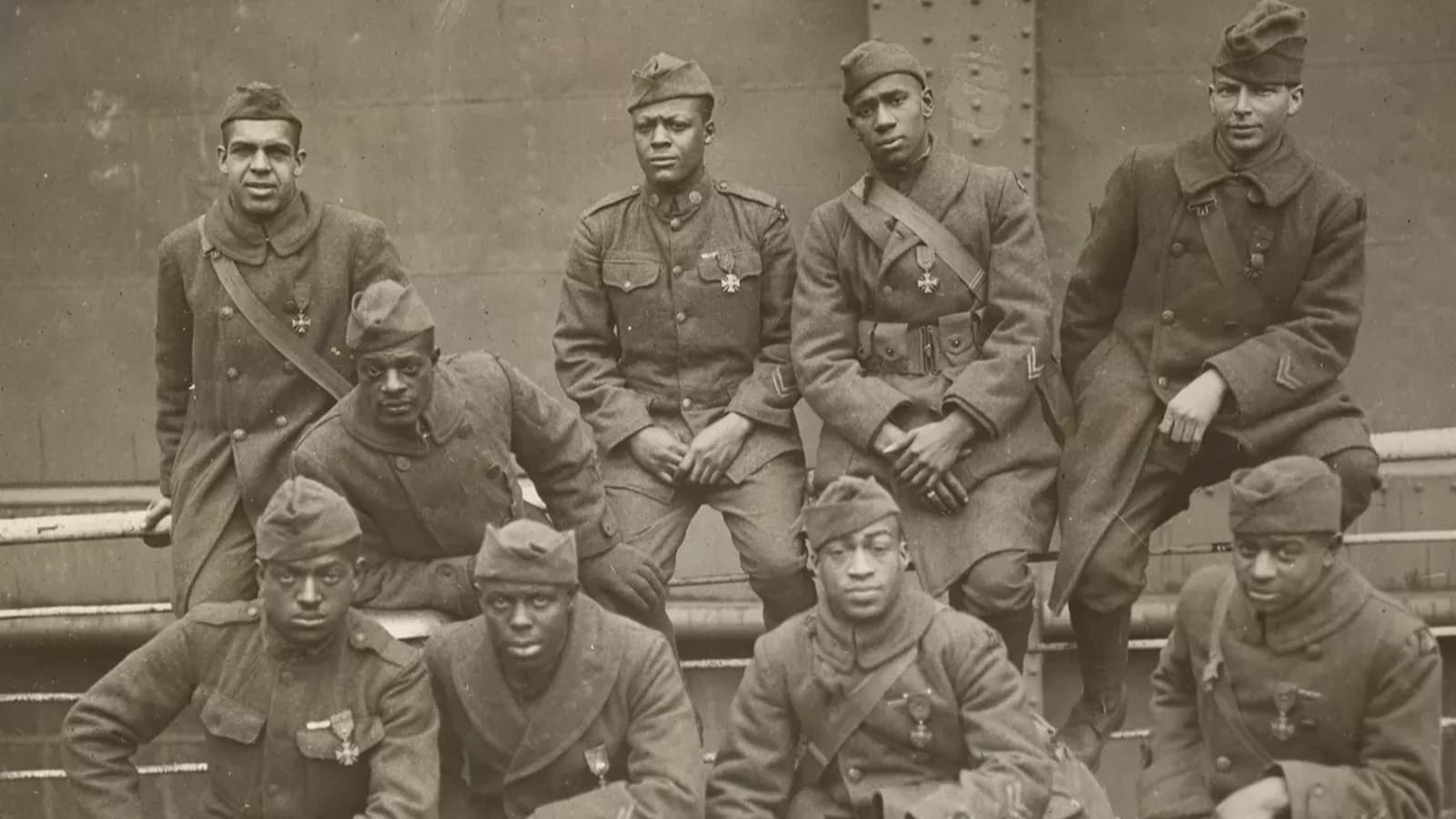
  • Next is Sechault, where an African-American regiment, the 369th Infantry (the famed “Harlem Hellfighters”) captured the town at the start of the Meuse-Argonne Offensive. Attached to the French Army, the 369th covered itself in glory, earning several Medals of Honor.
  • Continue drive to the fortress of Verdun.
  • Lunch and dinner on your own in Verdun, with the afternoon to explore this famed city with ties to history over many centuries.
  • Hotel: Les Jardins du Mess (or similar).
Soldiers of the 369th Infantry Regiment, the famed “Harlem Hellfighters,” an African-American unit that fought with distinction alongside French forces during World War I. Their heroic service, including the capture of Sechault in 1918, is remembered on our Great War: Americans in World War I expedition.

Monday, May 15, 2028

  • Breakfast
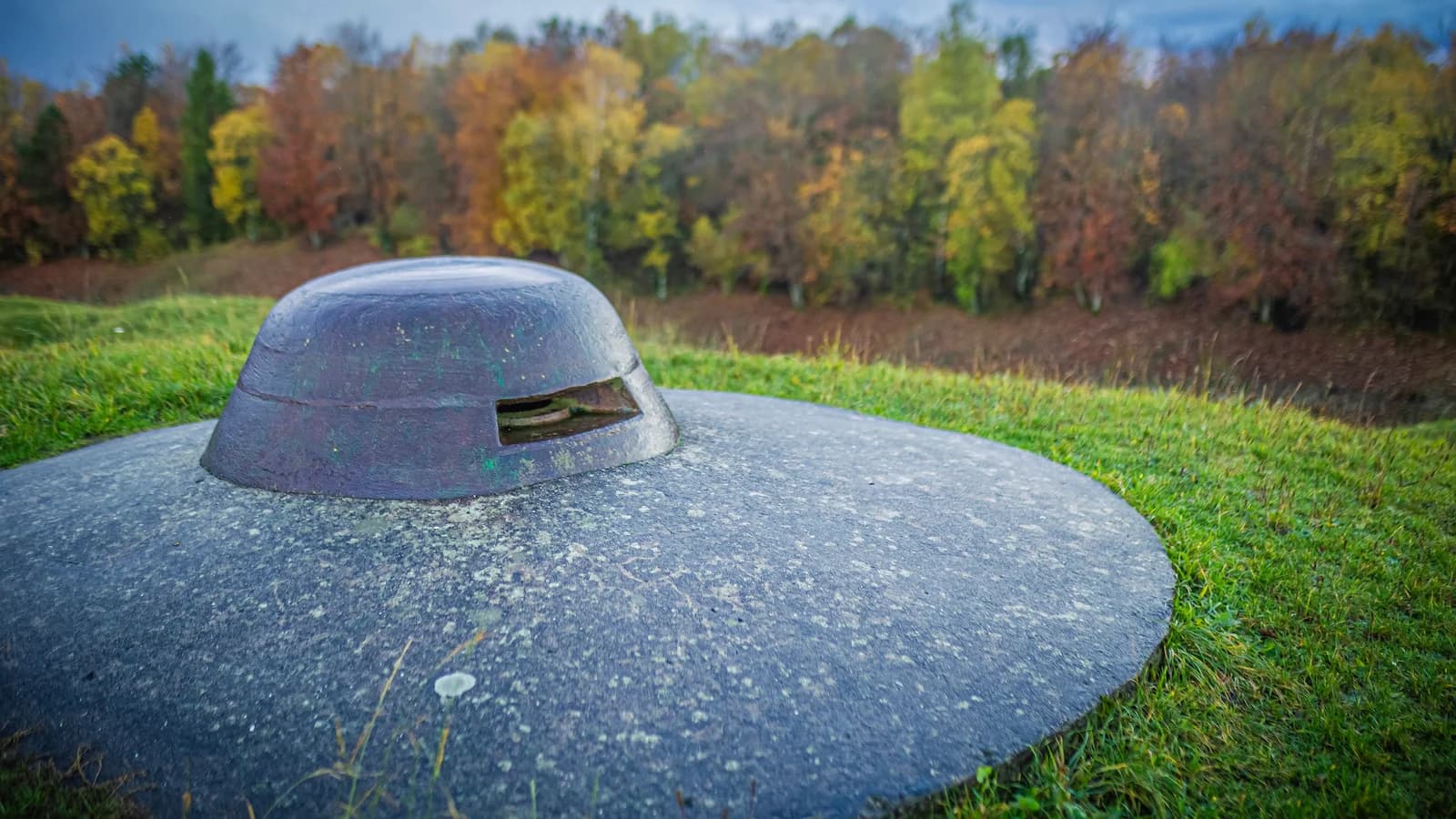
  • Verdun – site of the epic French defense and victory in 1916; this battle shapes the remainder of the war through its intense fighting and the incredible casualties sustained by both French and Germans. We will visit the incredible museum, walk the forests and see the famed forts of Vaux and Douamont.
  • Box Lunch.
  • St Mihiel Salient (September 1918) – Before the major offensive can be conducted by General Pershing’s Americans in the Argonne Forest, he first has to eliminate a bulge in the allied lines. The attack succeeds when the Americans break into the salient led by Colonel George Patton’s tanks. We will visit a number of sites in the battle area, including the commanding heights of Montsec and St Mihiel American Cemetery.
  • Social hour (optional) and dinner on your own in Verdun.
  • Hotel: Hotel Les Jardins du Mess.
Fort Douaumont at Verdun, one of the most fiercely contested fortifications of the entire war. A powerful symbol of the 1916 Battle of Verdun.

Tuesday, May 16, 2028

  • Breakfast, check-out and depart lodgings.
  • Meuse-Argonne Offensive (September 11 to November 1918) – the largest American battle in history, and the biggest American contribution to Allied victory. "During the three hours preceding H hour, the Americans and their French allies expended more ammunition than both sides managed to fire throughout the four years of the American Civil War. The cost was later calculated to have been $180 million, or $1 million per minute (about $3.6 billion in 2023 dollars)."
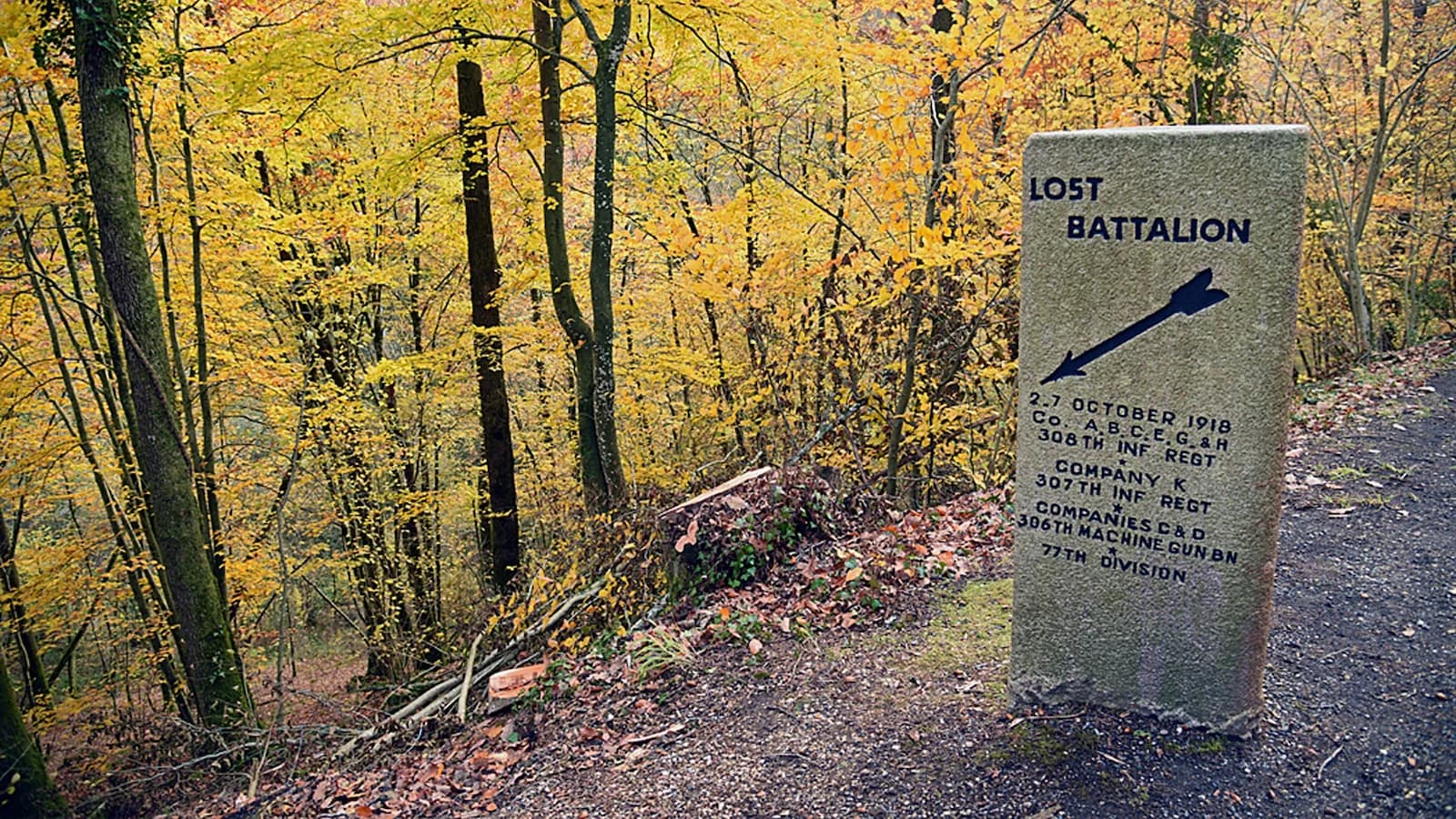
  • This day will find us at many remarkable sites, including Harry Truman’s artillery battery, Sergeant Alvin York’s capture of 132 Germans in his one-man crusade, and the incredible story of the Lost Battalion and its fight.
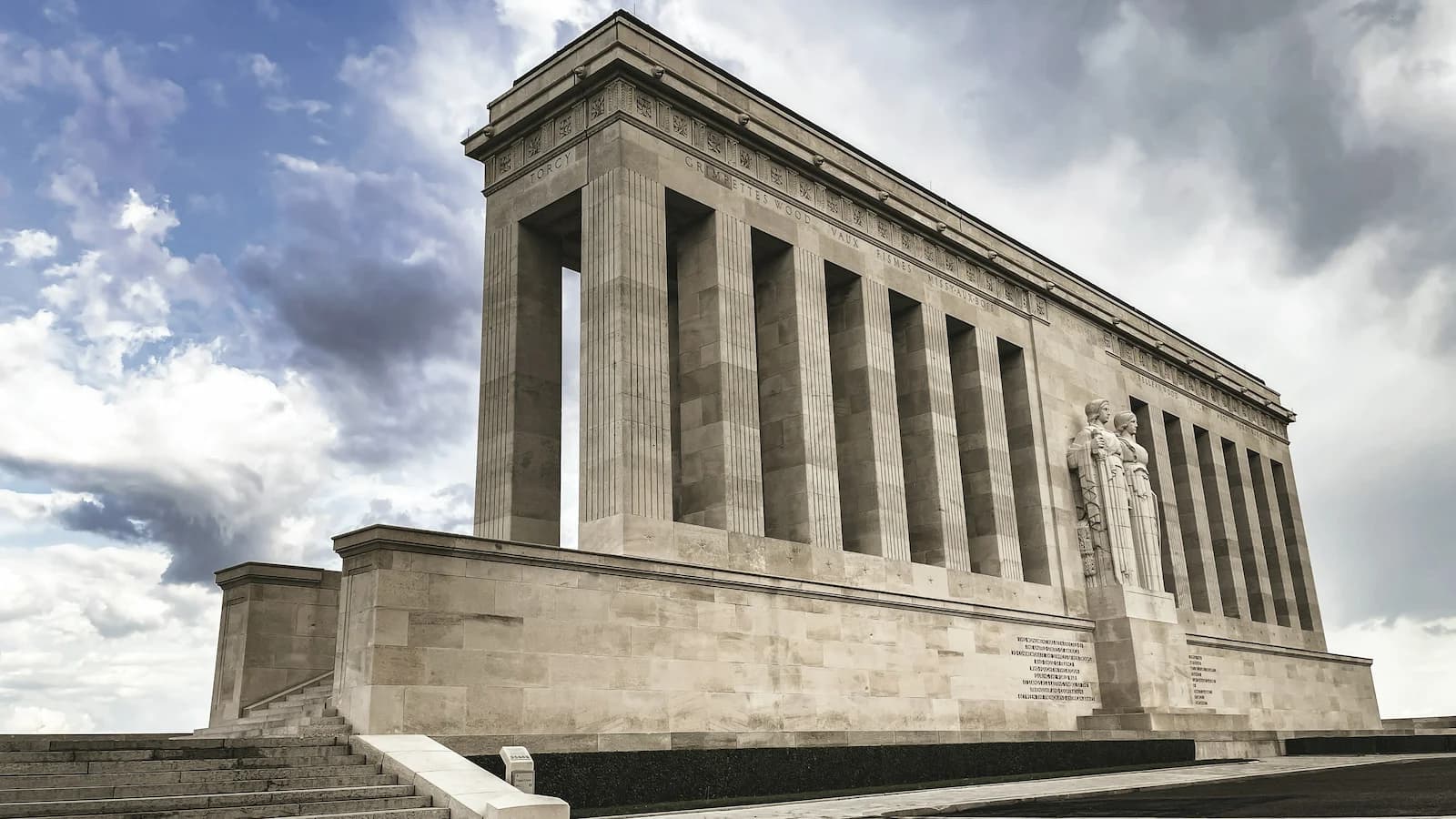
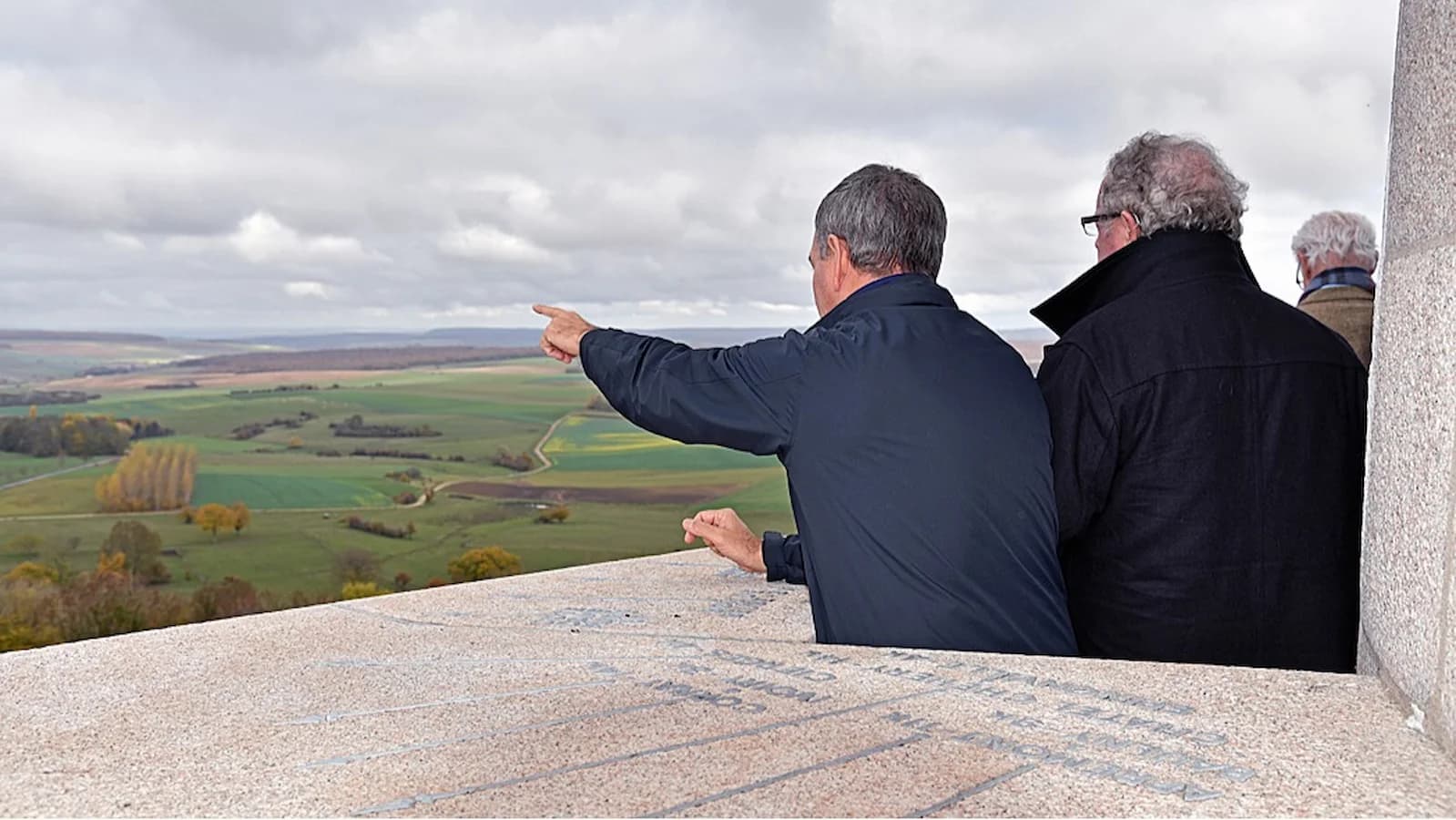
  • Next we will visit the Montfaucon Monument, a dramatic monument to the Americans in the Great War. Montfaucon was a significant German defensive position, and its capture and control will allow the Americans to advance deep into the heart of the German line, breaking it apart for the final drive to victory! Box lunch at Montfaucon.
  • We will walk through the beautiful Meuse-Argonne American Cemetery, the largest resting place of Americans in Europe.
  • Drive to Compiegne, scene of the German surrender on 11 November 1918. Compiegne is also the historic town of Joan of Arc as well as the Château de Compiègne, a royal residence built for Louis XIV and restored by Napoleon.
  • Social hour (optional) and final group dinner in Compiegne.
  • Hotel: Hotel Aiden (or similar).
Site associated with the Lost Battalion in the Argonne Forest. Famous for the heroic stand of the 77th Division in October 1918 during the Meuse-Argonne Offensive.
Dr. Brian DeToy leading guests at the Montfaucon Monument during the Meuse-Argonne Offensive. This towering memorial honors American forces in the largest battle in U.S. history.

Wednesday, May 17, 2028

  • Breakfast, check-out and depart lodgings.
  • Drive to the Railway Car site for the surrenders in November 1918 and June 1940. The victory monument placed here by the people of Alsace and Lorraine is a truly dramatic image. A tremendous museum has recently opened at the site.
  • Lunch on your own in one of the numerous restaurants in the center of the beautiful town or time to visit the Chateau.
  • Drive to Paris Charles de Gaulle International Airport to drop guests with flights that evening, while the others will return to central Paris (Gare du Nord) and end of the expedition.
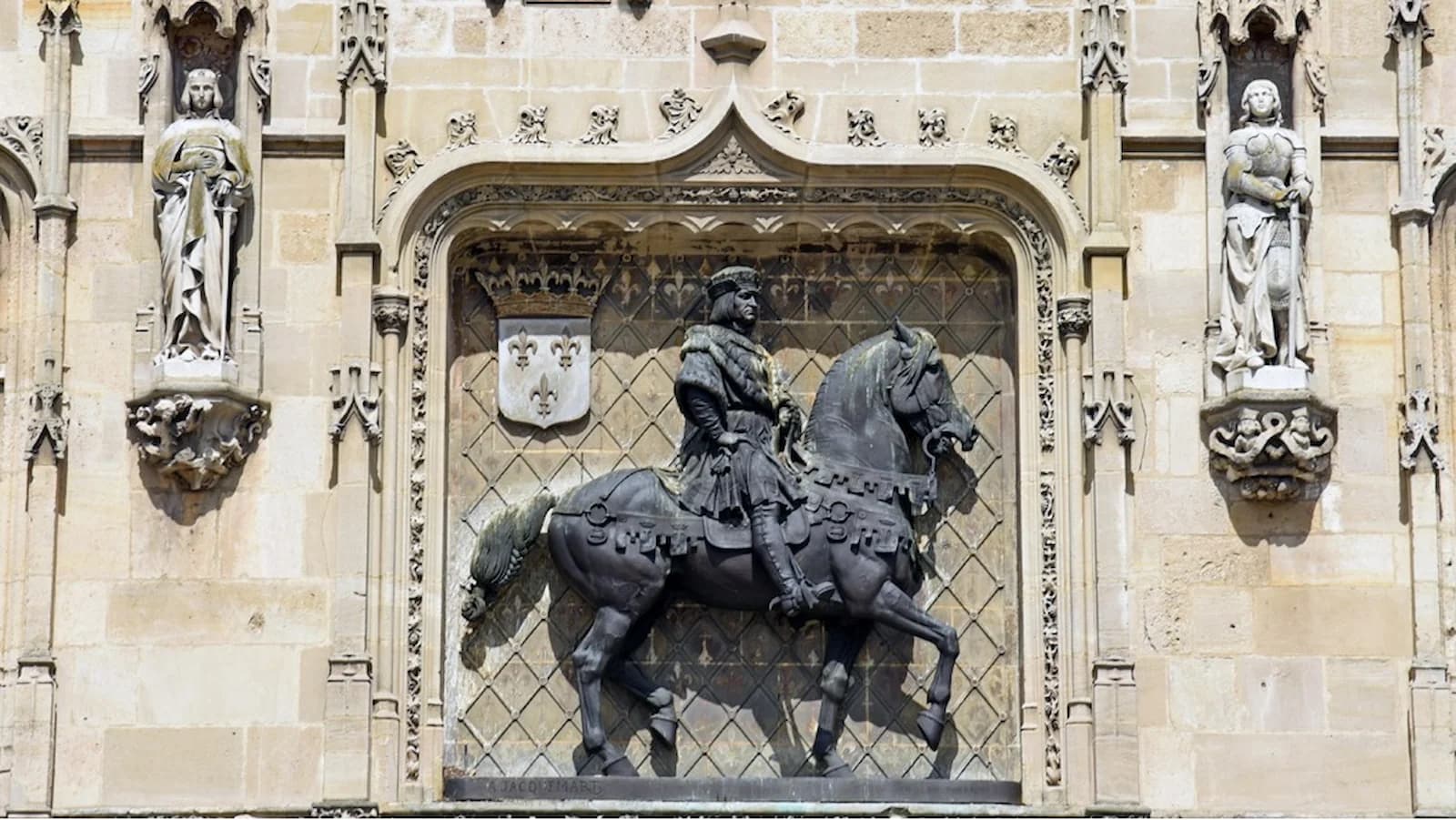
Bronze equestrian relief of King Louis XII on the facade of Compiègne Town Hall, France, visited at the conclusion of Essential History Expeditions’ World War I tour of the Western Front.