Logo
Expeditions
OpenPrivateOrganizations
Blog
About
Expeditions
OpenPrivateOrganizations
BlogAbout

Home

Open

Private

Organizational

About

Blog

Newsletter

Terms

Privacy Policy

Code of Conduct

Contact us

Subscribe to get the latest news

Follow us online

© Copyright Essential History Expeditions 2026. All rights reserved.

PEARL HARBOR TO HIROSHIMA

AMERICA’S PACIFIC WAR, 1941–45

Feb. 21 - Mar. 3, 2027

Traditional Okinawan Shisa statue overlooking the turquoise waters of Okinawa, Japan. These guardian lion-dog figures are iconic symbols of Ryukyuan culture and protection, photographed during our Pearl Harbor to Hiroshima tour.

Overview

PEARL HARBOR TO HIROSHIMA: AMERICA’S PACIFIC WAR, 1941–45

February 21 - March 3, 2027


This fully guided and immersive trip will explore the people and places of the Pacific Theater from December 1941 to September 1945. We will walk the beaches, explore the towns, and follow the operations from the “infamy” at Pearl Harbor through the jungles of the Marianas – Saipan, Guam and Tinian — to the final climactic battle of Okinawa and the ending at Hiroshima.


The events of 1941-45 continue to inspire long after the guns have fallen silent. This Pacific trip will bring guests to the beaches, cliffs and rugged ridges and fields; and villages, towns and cities where the Greatest Generation made their most indelible mark. From Seamen at Pearl and in the battle of the Philippine Sea; to Airmen on Tinian and above the beachheads; to Marines and Soldiers in intense fighting and brutal slugfests on Saipan’s Purple Heart Ridge and Death Valley and on Okinawa’s Sugar Loaf, Hacksaw Ridge and Shuri castle. Meanwhile banzai and kamikaze attacks threatened disaster at any moment. From Japan we make our onward journeys.


The WWII expedition unfolds over eleven days and ten nights with stories of all the Allied participants as well as those of the Japanese defenders and civilians.

Inclusions

  • Eleven days and ten nights of in-depth guided tours.
  • Full-time professional historian.
  • All lodging in 4 or 5-star hotels in each location: 2 nights in Honolulu, 1 night on Guam, 1 night on Saipan, 1 night in Incheon, 3 nights on Okinawa, and 1 night in Hiroshima.
  • Breakfast at all hotels. Lunches and dinners per itinerary.
  • All museum and other entrance fees per itinerary.
  • Daily transportation on bus or van with driver.
  • Full-time tour director for personalized tour support.
  • Commercial flights, economy-class, from Honolulu to Guam, Guam to Saipan, Saipan to Tinian and return, Saipan to Incheon, Incheon to Okinawa and Okinawa to Hiroshima. Flights are based on economy tickets; We will provide pricing for business-class upgrades when booking flights.
  • All airport transfers to/from airports/hotels.
  • Train ticket from Hiroshima to Tokyo.

Exclusions

  • Flights to Hawaii or from Japan.
  • Airport transfers.
  • Alcohol, unless specifically included in the itinerary.

Please note that our expedition begins in Honolulu and ends in Tokyo.

Pricing

Rates

Rates are based on double occupancy:

  • Double Occupancy: $11,000 per person ($22,000 total)
  • Single Occupancy: $12,000 per person (includes $1,000 supplemental fee)


Deposit and Final Payment

  • There is a $3,000 per person deposit required to confirm booking.
  • Final payment is due 120 days prior to start of expedition.
  • Pricing subject to change at final payment based on actual flight costs.
  • See Terms & Conditions here.

your expedition leaders

WWII PAcifc expedition dates

$11,000 per person
StartFebruary 21, 2027
EndMarch 3, 2027
Join Waitlist

$11,000 per person

Join Waitlist

Expedition Itinerary

Product photo

Dr. Brian DeToy

EHE President & Co-Founder

Product photo

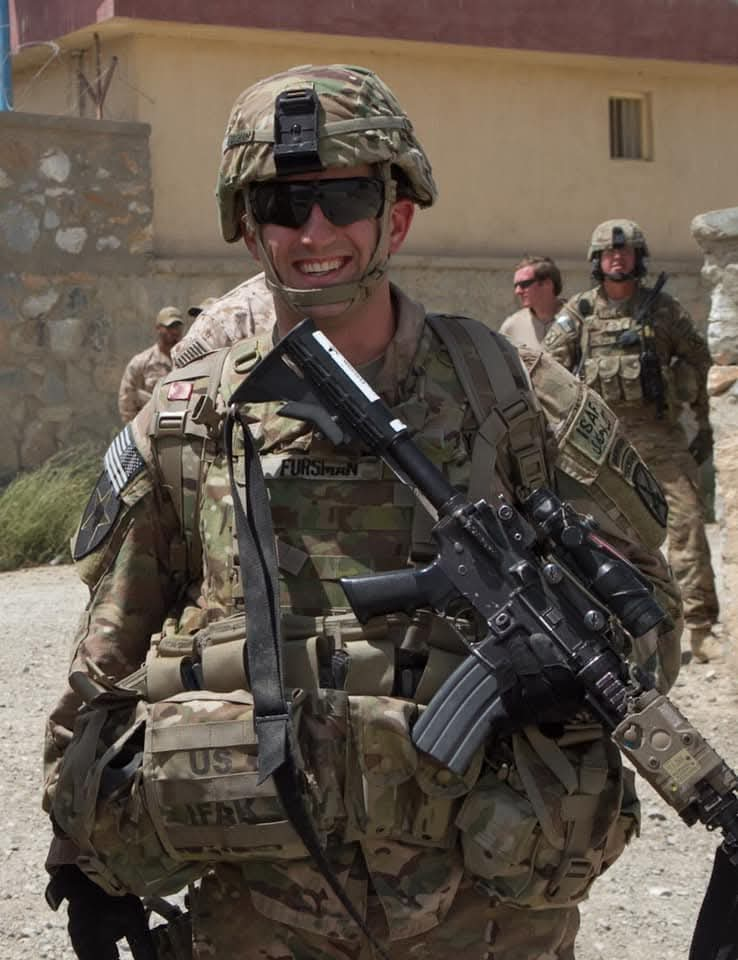
Jonathan Fursman

Expedition Director

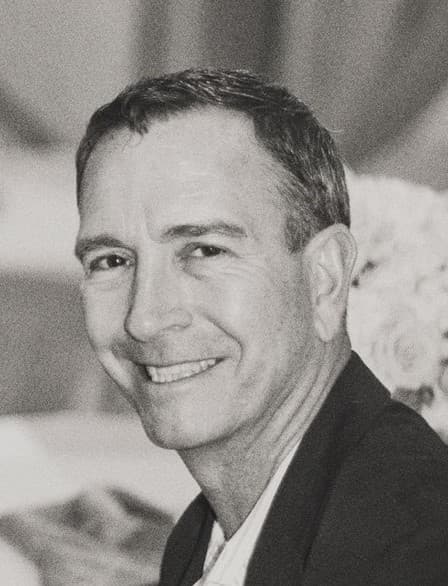
Dr. Brian DeToy

Expert historian and expedition guide, Brian is a retired U.S. Army Infantry Officer who graduated from the University of Notre Dame with a BA in History and holds a PhD from Florida State University in European History.


While on active duty, he served as Director of the Defense & Strategic Studies program at the United States Military Academy, West Point, Assistant Professor in the Academy’s History Department, Chief of Research and Publications in the Combat Studies Institute at Fort Leavenworth, Kansas, and Professor of Military Science at the University of Kansas. He also served as the theater Command Historian for the Multi-National Corps-Iraq out of Baghdad.


Brian draws on his deep knowledge of military history and experience in the field to give EHE guests the most in-depth, personal look at not only the lessons of historical battles around the world but the cultures of the people who fought them.

Product photo

Dr. Brian DeToy

EHE President & Co-Founder

Product photo

Jonathan Fursman

Expedition Director

Jonathan Fursman

Jonathan is a retired U.S. Army Infantry officer who commissioned out of Cornell Army ROTC with a BA in Government. Jon also holds a Master of Public Policy from The George Washington University.


On active duty, Jon deployed as a combat leader to Iraq and Afghanistan multiple times, including as a rifle company commander in Baghdad in 2007. He was also an Assistant Professor of Defense & Strategic Studies at the United States Military Academy, West Point, NY for three years where he became an expert at leading staff rides. He later worked in Strategic Plans & Policy at U.S. Africa Command, commanded a Stryker infantry battalion, and served in the Republic of Korea for four years.


Today, he blends his professional military and teaching experience with his education in military strategy and public policy to deliver unique, thoughtful expeditions for EHE guests around the world.

Expedition types

Open Expeditions

Join a scheduled expedition

Private Expeditions

We custom build your expedition

Organizational Expeditions

Meet your mission

Contact Us

Sunday, February 21, 2027

  • Arrive no later than 5 pm and check-in to the famed Moana Surfrider, the “grand dame” of Waikiki.
  • Social Hour on the hotel verandah with views of Diamond Head and a spectacular Pacific sunset.
  • Opening group dinner with an overview of the expedition and introductions.
  • Hotel: Moana Surfrider on Waikiki.
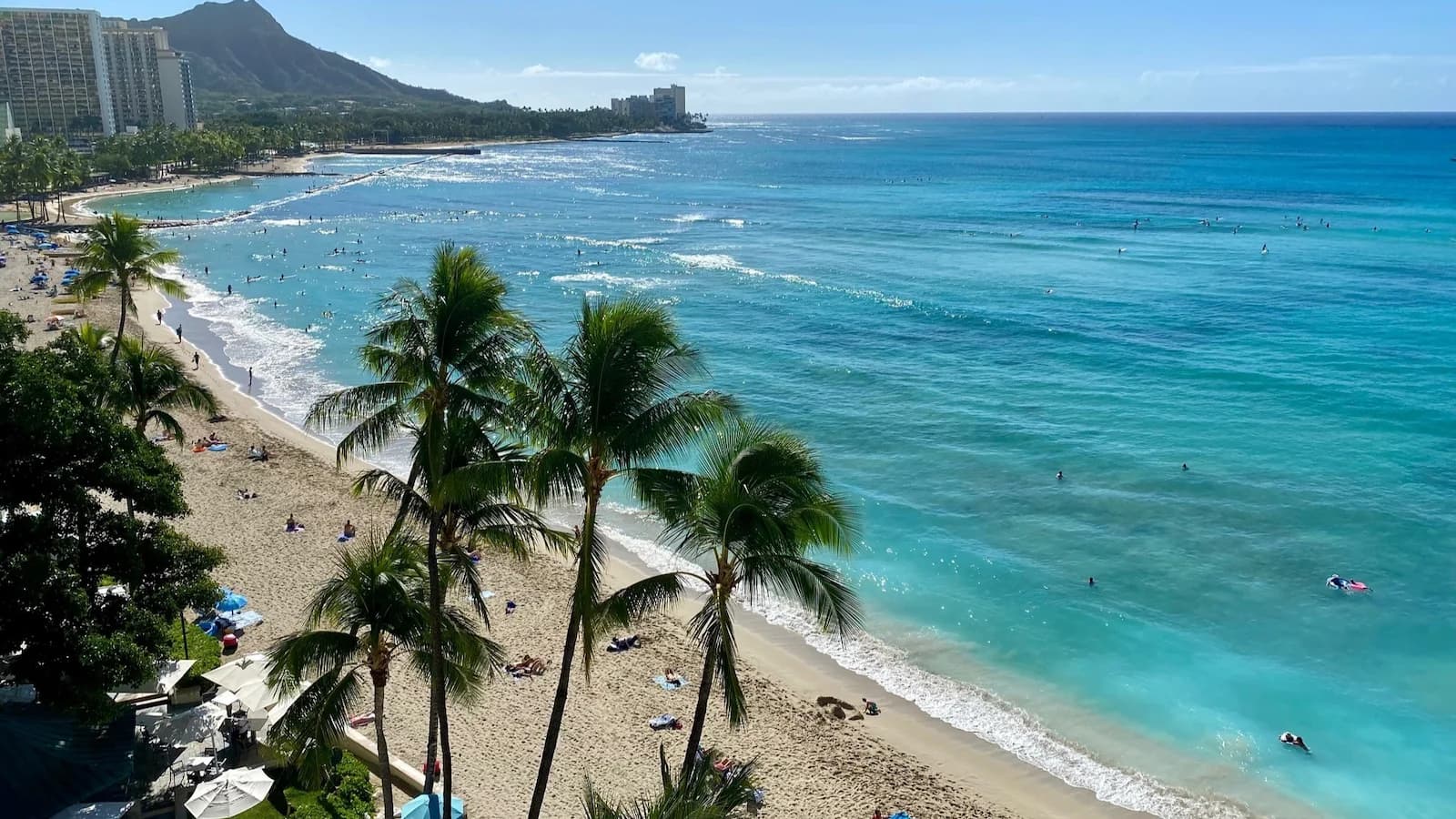
View from the historic Moana Surfrider Hotel on Waikiki Beach, Honolulu and the “First Lady of Waikiki.” The Surfrider is our base for the Hawaii portion of the Pearl Harbor to Hiroshima expedition.
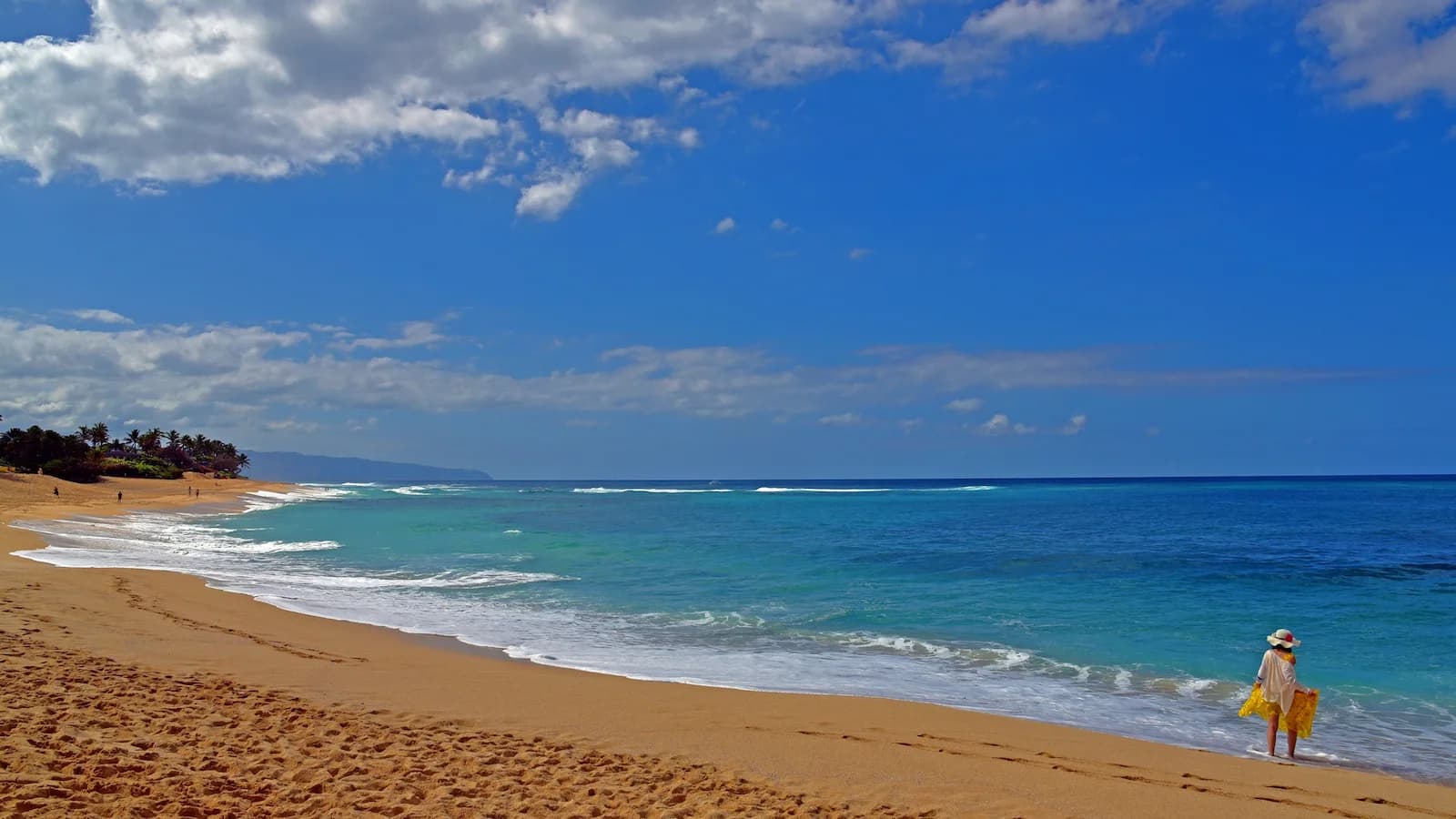
Scenic view of an Oahu beach. A classic Hawaiian landscape.

Monday, February 22, 2027

  • Breakfast
  • Drive to Camp Smith (active USMC base and home to the joint Indo-Pacific Command HQ).
  • Discuss Japanese attack on Pearl Harbor of December 7, 1941. The Officer’s Club on the hill of Camp Smith offers a superb overview location of Pearl Harbor down below. Includes a light lunch buffet.
  • Drive to Pearl Harbor National Memorial, visit the NPS WWII Museum and take US Navy boat out to USS Arizona Memorial to visit the hallowed site of the Pearl Harbor attack on December 7, 1941. You can also tour the USS Bowfin, a WWII submarine known as “The Avenger of Pearl Harbor.”
  • This attack shook the US from its isolationist shell and brought it into the World War that was raging in both Europe and Asia. The might of American industry and military power was unleashed, eventually defeating expansionist Nazi fascism and Japanese militarism.
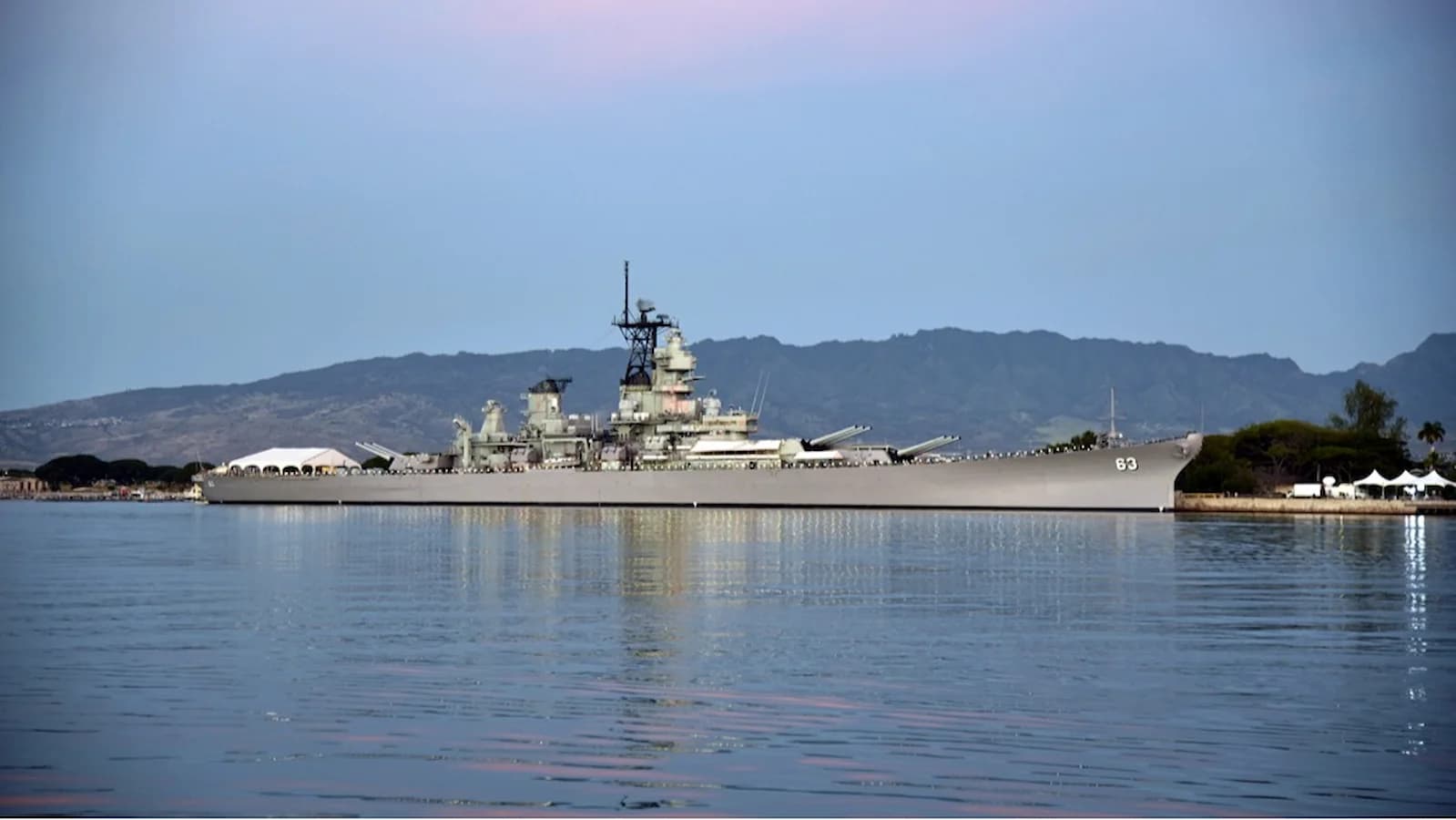
  • Drive to USS Missouri, alongside Ford Island and have a private tour of the battleship USS Missouri. On her decks the Japanese surrendered in Tokyo Bay on September 2, 1945, to an international coalition of Allies led by General Douglas MacArthur.
  • Drive to Pearl Harbor National Memorial and visit the USS Utah Memorial, honoring the 64 sailors who lost their lives when the battleship capsized during the Japanese attack.
  • Return drive to lodgings.
  • Dinner on your own in Waikiki.
  • Hotel: Moana Surfrider on Waikiki.
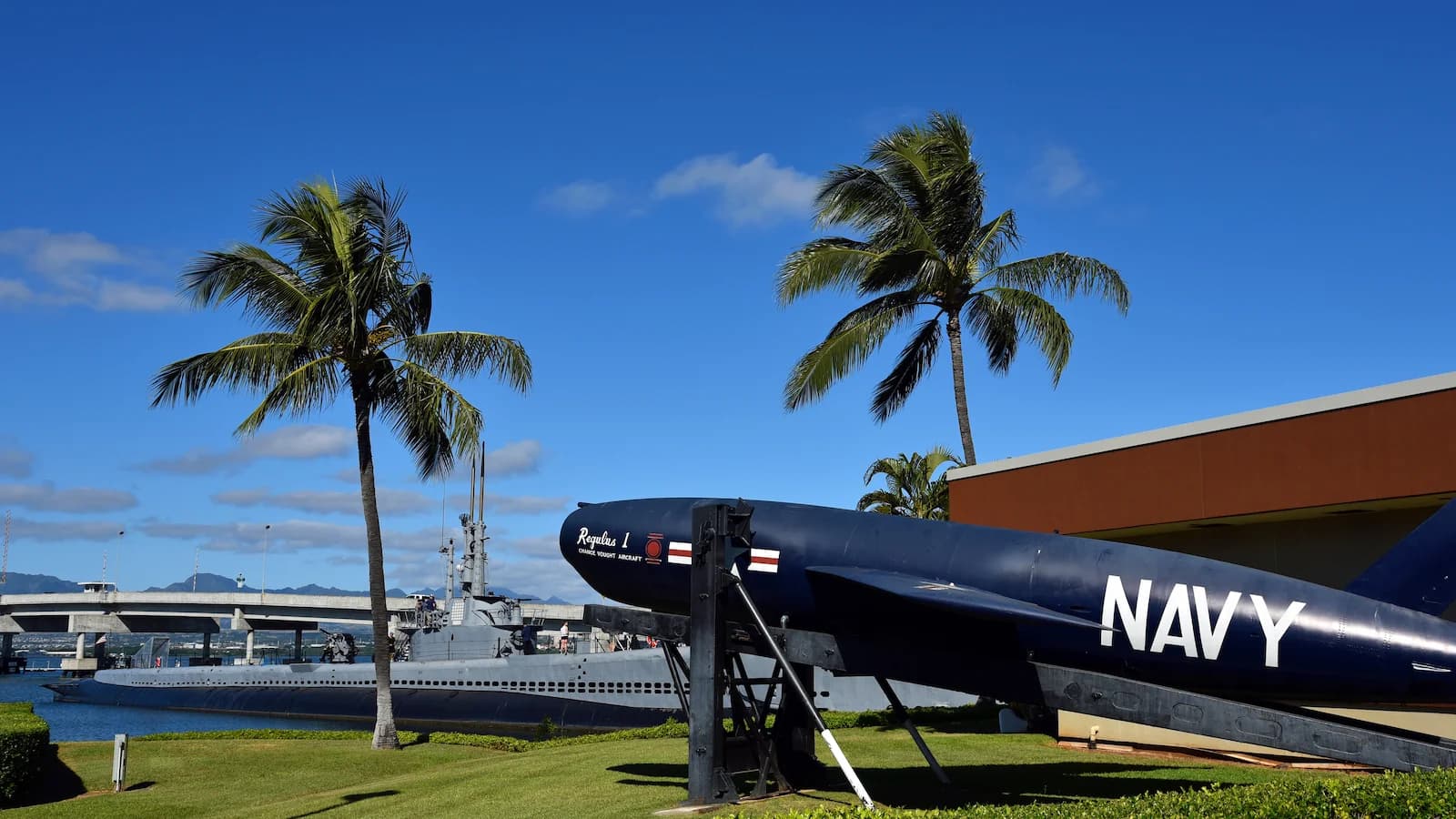
USS Bowfin (SS-287), a World War II Gato-class submarine known as the “Pearl Harbor Avenger,” on display at Pearl Harbor, Hawaii. This highly successful submarine conducted nine war patrols and is one of the most visited historic vessels at the Pearl Harbor National Memorial.
Sunrise illuminating the USS Missouri in Pearl Harbor, Hawaii. The deck where the Japanese surrender was signed on September 2, 1945, officially ending World War II.

Tuesday, February 23, 2027

  • Breakfast, load luggage and depart lodgings.
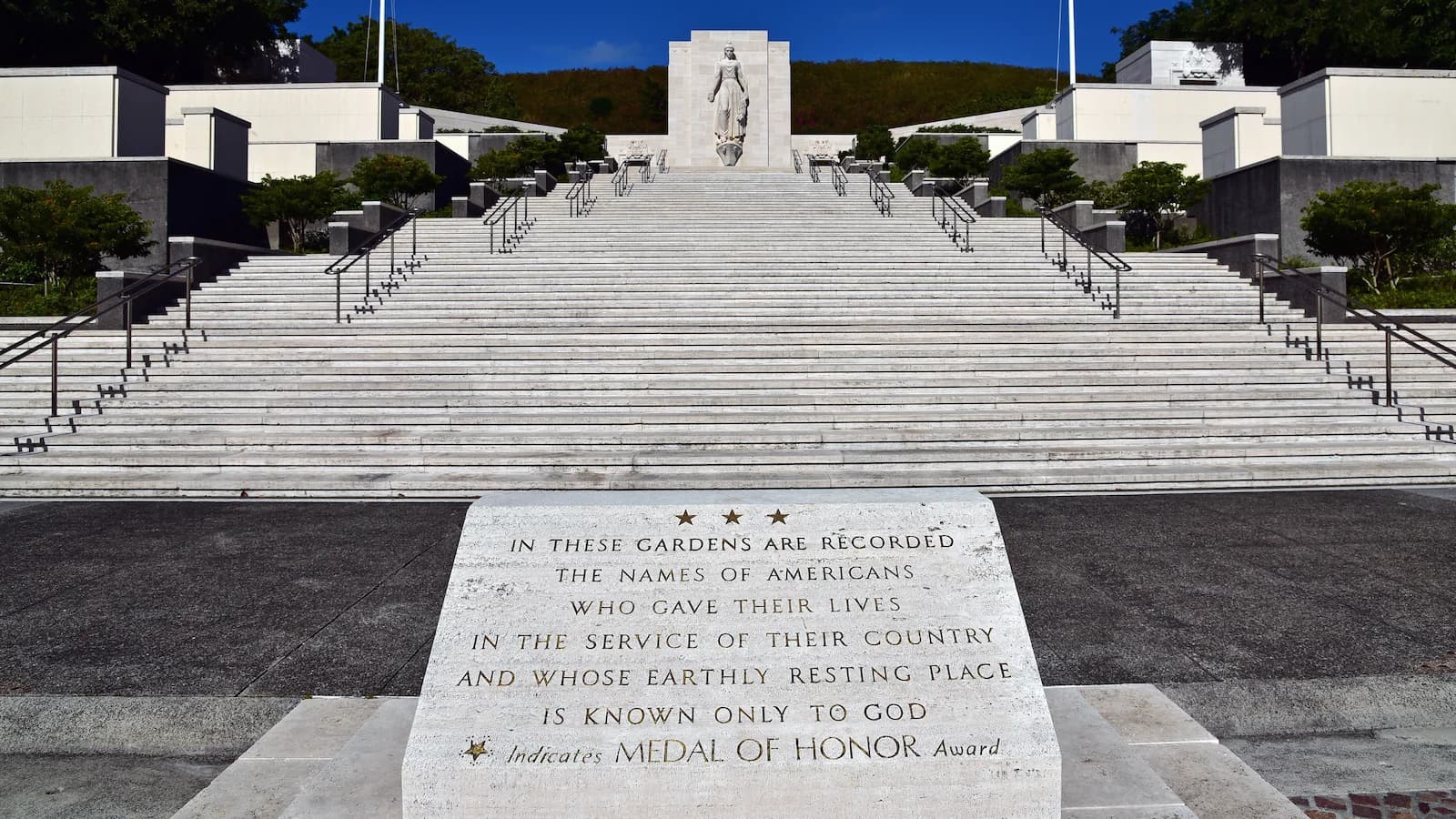
  • Drive to National Cemetery and visit the National Memorial Cemetery of the Pacific in the Punch Bowl Crater. Thousands of Americans from WWII through Korea, Vietnam and the present lay in honor here. The maps depict all the major actions of the wars.
  • Drive to Hickam Air Force Base (AFB) and visit the Defense Personnel Accounting Agency (DPAA) on Hickam AFB. The DPAA is charged by Congress with finding and accounting (identifying and repatriating when possible) for the remains of American servicemen and women from WWII through Vietnam. It is an amazing organization.
  • Drive to Inouye Honolulu International Airport and check-in for flight to Guam.
  • Lunch on your own at the airport.
  • United flight from Honolulu to Guam International Airport.
  • Dinner aboard flight.
National Memorial Cemetery of the Pacific at Punchbowl Crater, Honolulu. Final resting place for thousands of American service members from World War II and later conflicts in the Pacific.

Wednesday, February 24, 2027

  • Evening arrival at Guam International Airport after 7 ¾ hour non-stop United flight over the International Dateline.
  • Meet bus and drive to beachside lodgings and check-in.
  • Dinner on your own (you will have had a meal aboard the flight, as well).
  • Hotel: Guam Hilton Resort & Spa.
Coastal landscape of Guam in the Mariana Islands. First major island recaptured in the Central Pacific Campaign and a vital U.S. base during the drive toward Japan.

Thursday, February 25, 2027

  • Check-out and depart lodgings with luggage.
  • Drive to Guam International Airport and check-in.
  • United flight from Guam to Saipan International Airport.
  • Load bus for Saipan battle visit.
  • Operation FORAGER, the seizure of the Marianas Islands, was the largest and most complex operation to date in Nimitz’ Central Pacific Ocean Areas theater. Coming hard on the heels of Normandy, the fleet was much more powerful here than in Europe. It comprised 15 carriers, 7 battleships, 11 cruisers, 86 destroyers and over 900 planes. The amphibious force consisted of 56 attack transports, 84 landing craft and over 127,000 Army and Marine troops.
  • Breaking into the main line of Japanese island defenses would provide air bases to take the war to Japan’s industry and cities.
  • Saipan and neighboring Tinian were most important. We will visit the Airfield seizure, Landing Beaches, Death Valley/Purple Heart Ridge, Mount Tapotchai overlook, scene of final massed banzai charge, Suicide Cliff and Japanese final defense, Banzai Cliff, Korean Memorial, and the NPS American Memorial. Two Marine and one Army division fought here.
  • Box lunch from Great Harvest Bread Co. at Mount Tapotchai overlook site.
  • The concurrent naval-air Battle of the Philippine Sea (the famed “Marianas Turkey Shoot”) broke the back of Japanese carrier aviation for the remainder of the war.
  • Check-in to Saipan lodgings.
  • Social hour at either Plumeria Steakhouse or Tapped Out.
  • Dinner on your own in Garapan, Saipan.
  • Hotel: Crowne Plaza Resort.
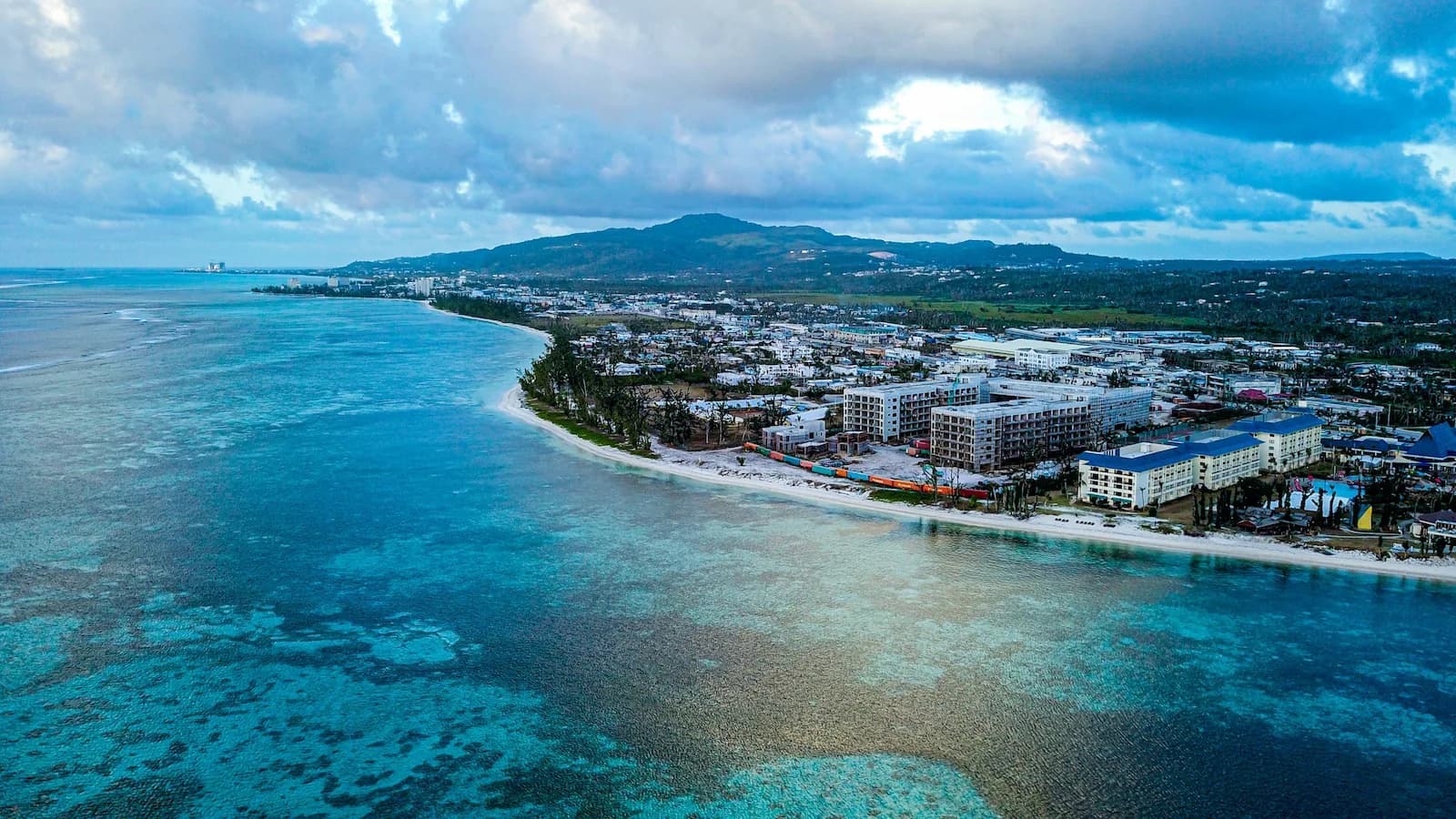
Aerial view of Garapan and the western coastline of Saipan in the Mariana Islands. Site of intense fighting during the 1944 Battle of Saipan and a key location on our Pearl Harbor to Hiroshima: America’s Pacific War expedition.
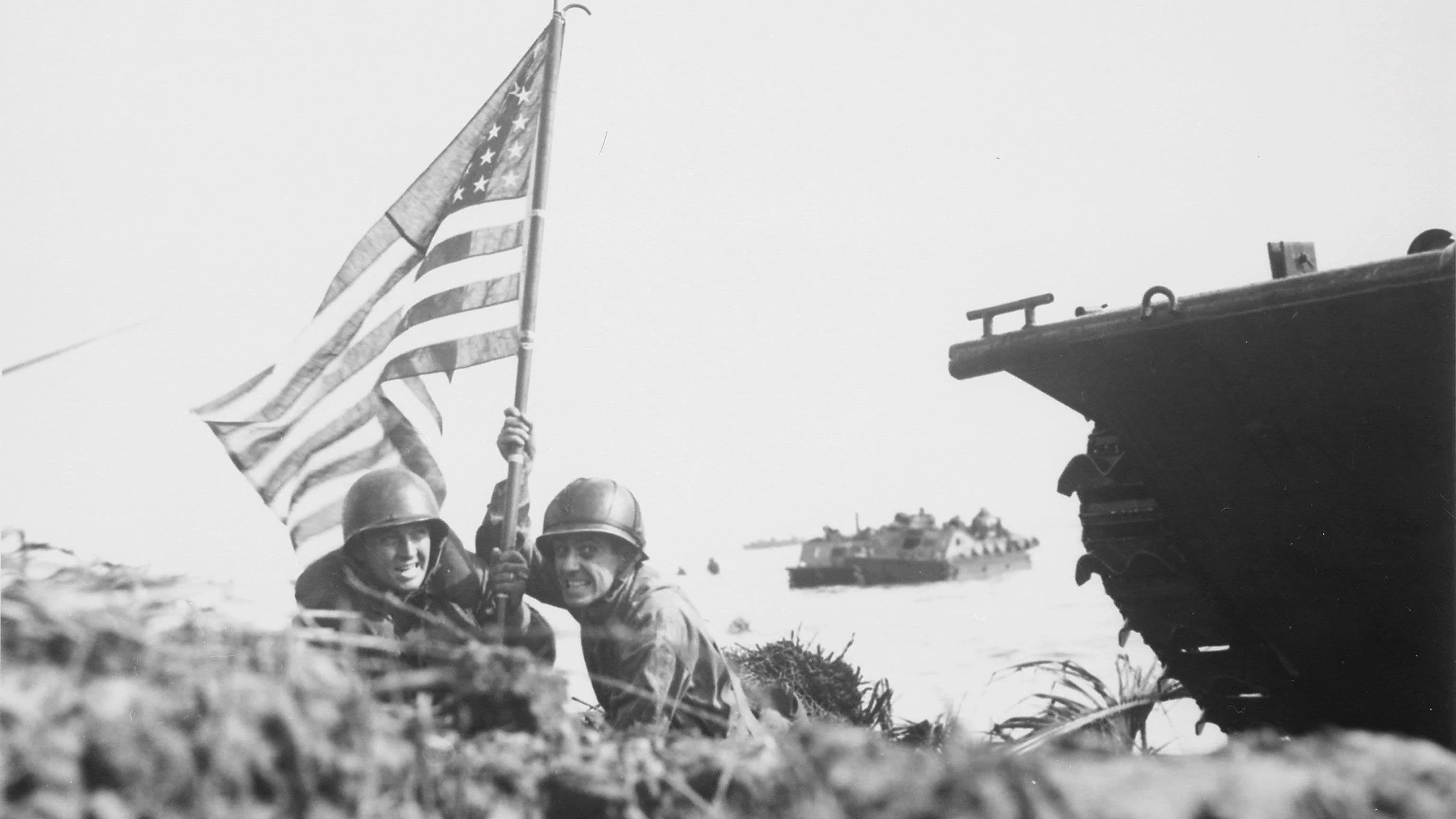
Marines of the 3rd Marine Division raise the first American flag on Guam after recapturing the island from Japanese forces in 1944 representing a powerful symbol of the Pacific War advance toward Japan.

Friday, February 26, 2027

  • Breakfast
  • Check-out and depart lodgings with luggage.
  • Drive to Saipan International Airport for the short charter flight to Tinian Island.
  • Load two vans at Tinian Airport and visit Japanese cave defenses, Runways ABLE and BAKER, Atomic Bomb Loading area, and the Seabee Memorial. If time allows, visit Landing Beach and amphtrac. Two Marine divisions fought on Tinian.
  • Tinian’s airbases became the world’s busiest airport from November 1944-July 1945, primarily as a B-29 Superfortress base of the US Army Air Forces’ 20th Air Force. Both the Enola Gay and Bockscar flew from here in August 1945.
  • Group lunch at JC Café in San Jose, Tinian.
  • Drive to Tinian airport for return flight from Tinian to Saipan International Airport.
  • Check-in for flight to Incheon, Korea (Seoul).
  • Flight from Saipan to Incheon International Airport, with dinner on the flight.
  • On arrival in Korea, we will go through Passport Control and then gather luggage and check-in to airport hotel.
  • Hotel: Grand Hyatt Incheon.
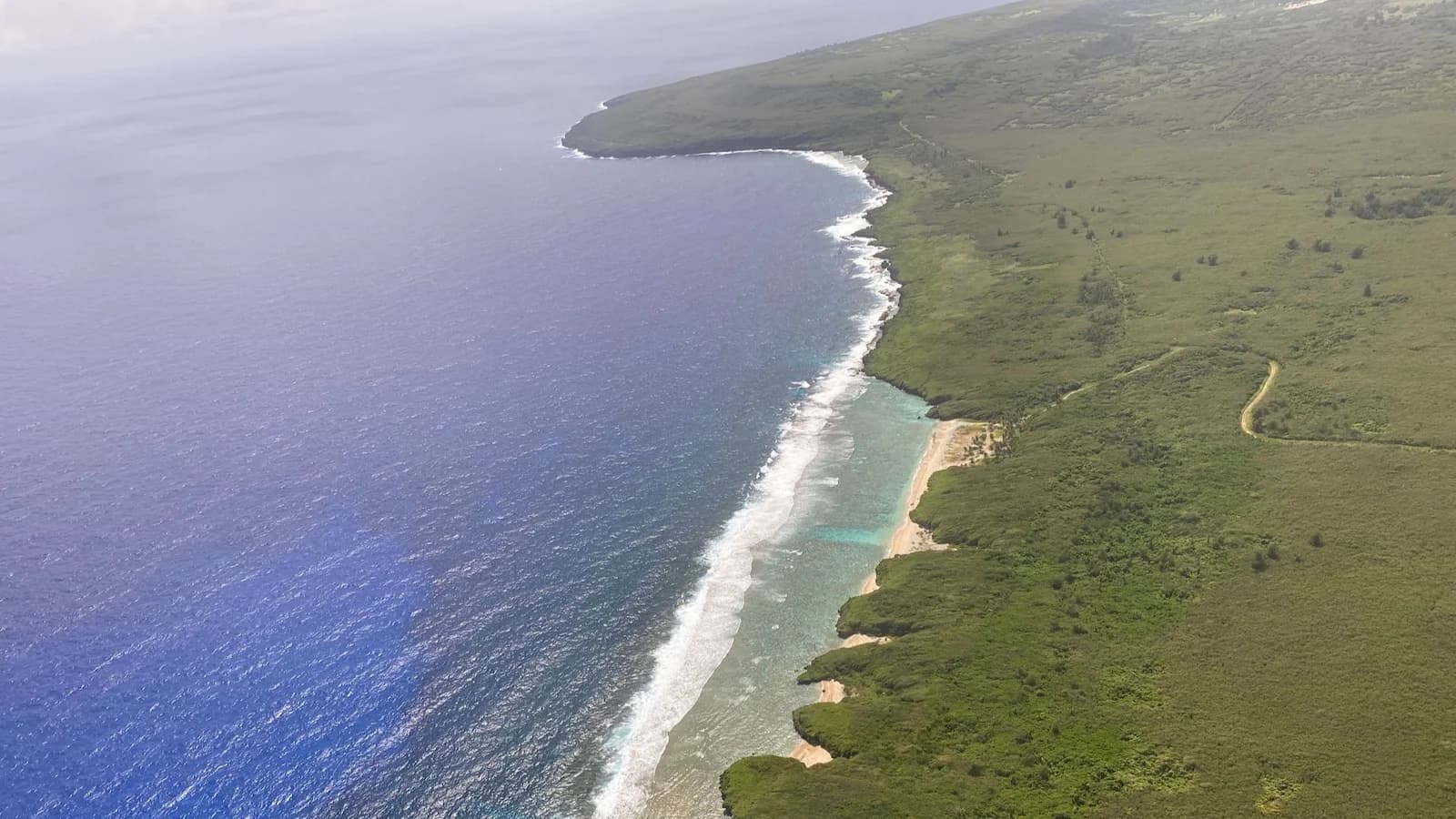
Aerial view of the northern coastline of Tinian in the Mariana Islands. This island was a critical U.S. base in 1945, from which the atomic bombing missions against Hiroshima and Nagasaki were launched during the final months of World War II.
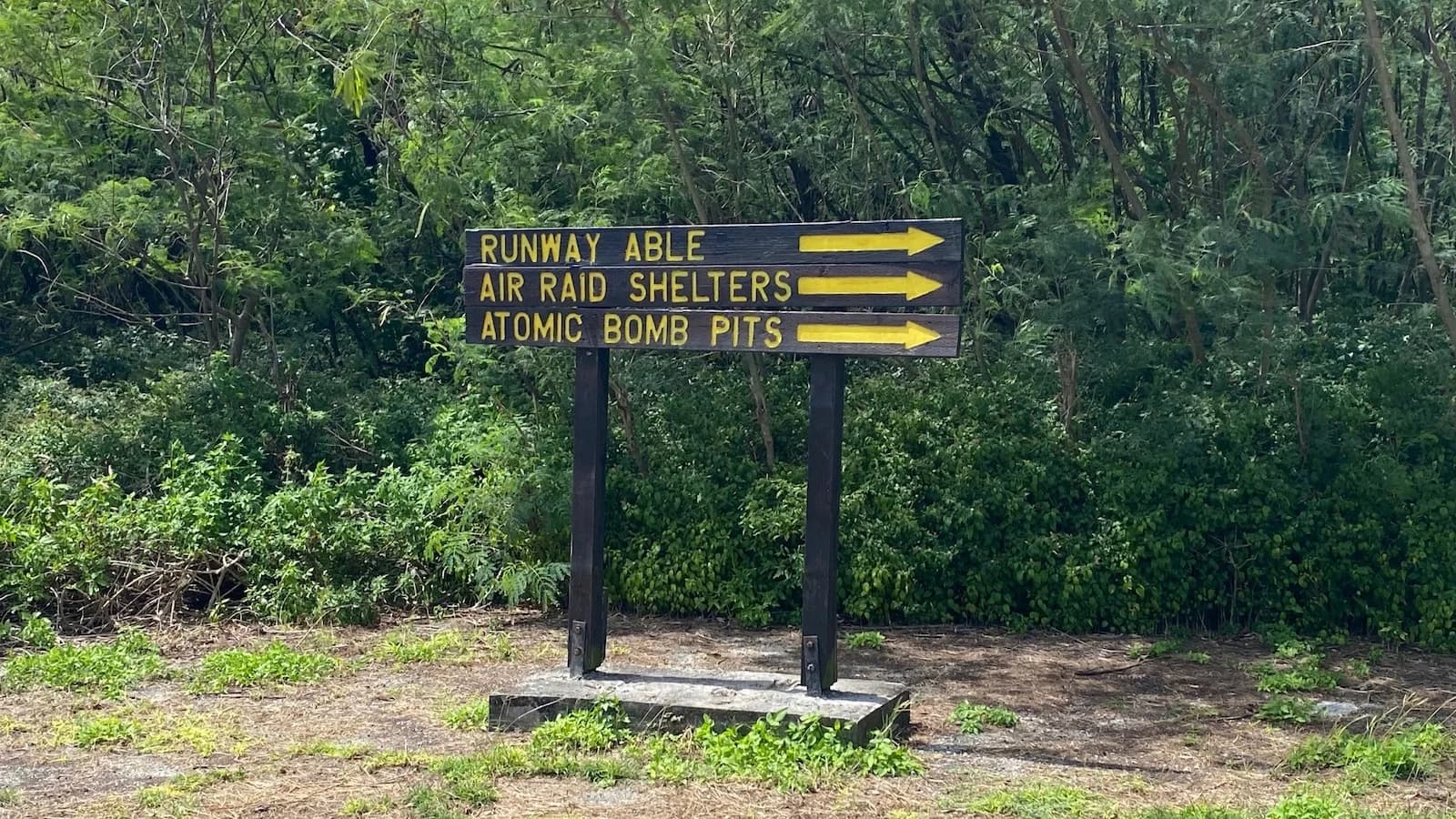
Historic sign on Tinian pointing to Runway Able, air raid shelters, and the Atomic Bomb Pits. From these runways the B-29 Superfortress Enola Gay departed for the atomic bombing of Hiroshima on August 6, 1945.

Saturday, February 27, 2027

  • Breakfast, then check-out with luggage.
  • Return to Incheon International Airport.
  • Mid-morning flight to Naha, Okinawa.
  • On arrival on Okinawa, we will go through Passport Control, gather luggage and board bus for the short trip to Naha Harbor.
  • Board charter boat and sail to Chatan Harbor. As we approach the harbor, we will be coming in on the invasion beaches of April 1, 1945, specifically the 96th Infantry Division on WHITE and BROWN. Lunch aboard the boat.
  • After a short walk down the boardwalk, we check-in to our lodgings in the American Village.
  • Group dinner at Four Seasons Teppanyaki Steakhouse.
  • Hotel: Hilton Chatan Resort.
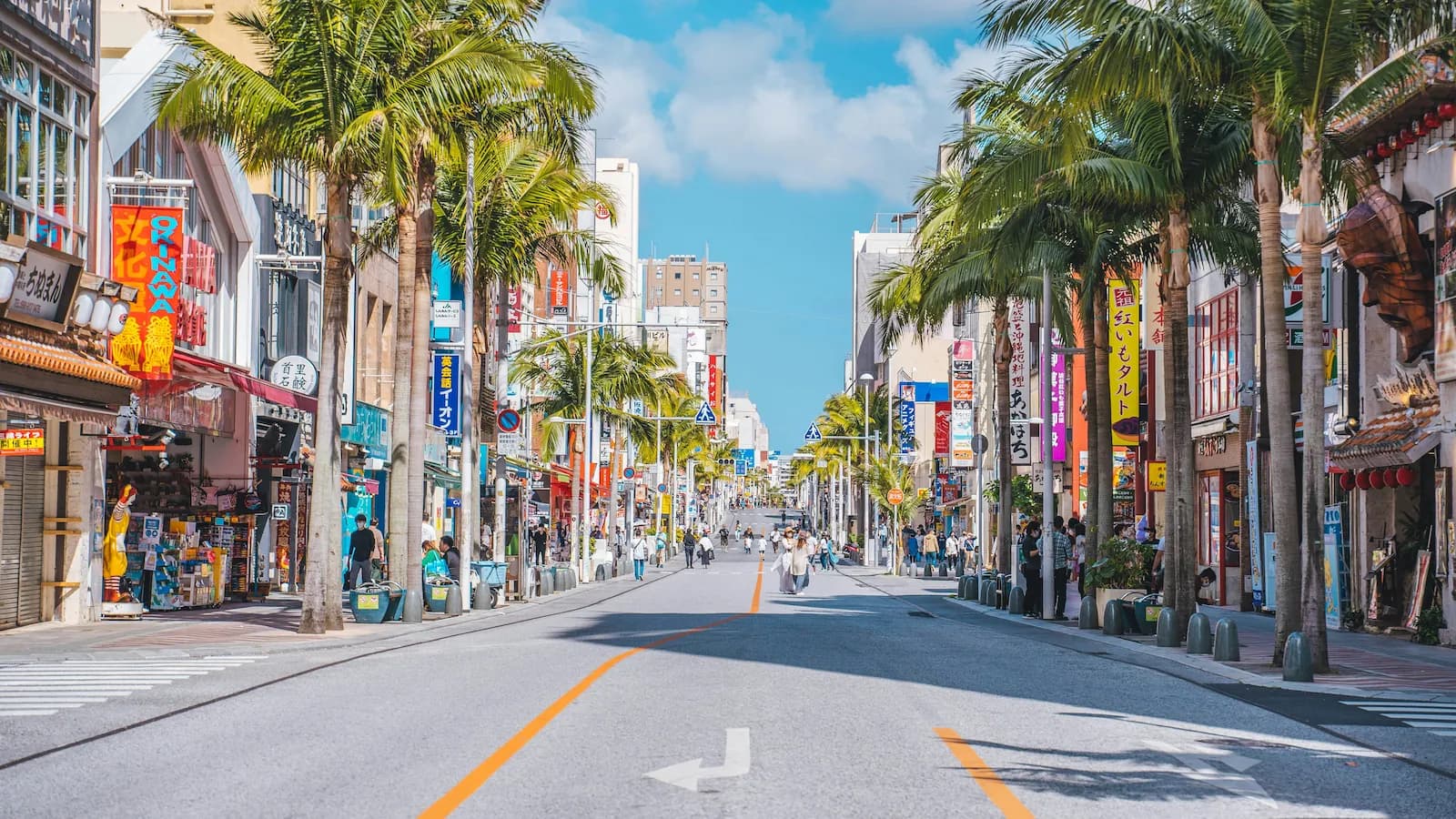
Bustling main street in Naha, Okinawa which is the largest city on the island and a focal point during the Battle of Okinawa in spring 1945. A lively modern contrast to the intense fighting that occurred here 80 years ago.

Sunday, February 28, 2027

  • Breakfast.
  • Depart lodgings.
  • Half a million men served on Okinawa in General Simon Buckner’s US Tenth Army, with four Army and three Marine divisions. The invasion was supported by a fleet consisting of 18 battleships, 27 cruisers, 177 destroyers/destroyer escorts, 39 aircraft carriers (11 fleet carriers, 6 light carriers and 22 escort carriers) and various support and troop transport ships. It was the most powerful fleet in history.
  • We will visit the American attacks on the heavily fortified Japanese defensive lines at Kakazu Ridge, Hacksaw Ridge, Wana Ridge & Wana Draw with boxed lunch. Visit Shuri Castle (Sugar Loaf Hill), and Conical Hill in the afternoon.
  • Okinawa was second only in size to the invasion of Luzon in the Pacific War; it also saw the most casualties of any American campaign in the Pacific. In addition, the Japanese military lost an entire army of over 100,000 men and the Okinawan civilian population lost another 100,000. Any invasion of the Japanese main islands was thus thrown into stark relief.
  • Dinner on your own in the American Village.
  • Hotel: Hilton Chatan Resort.
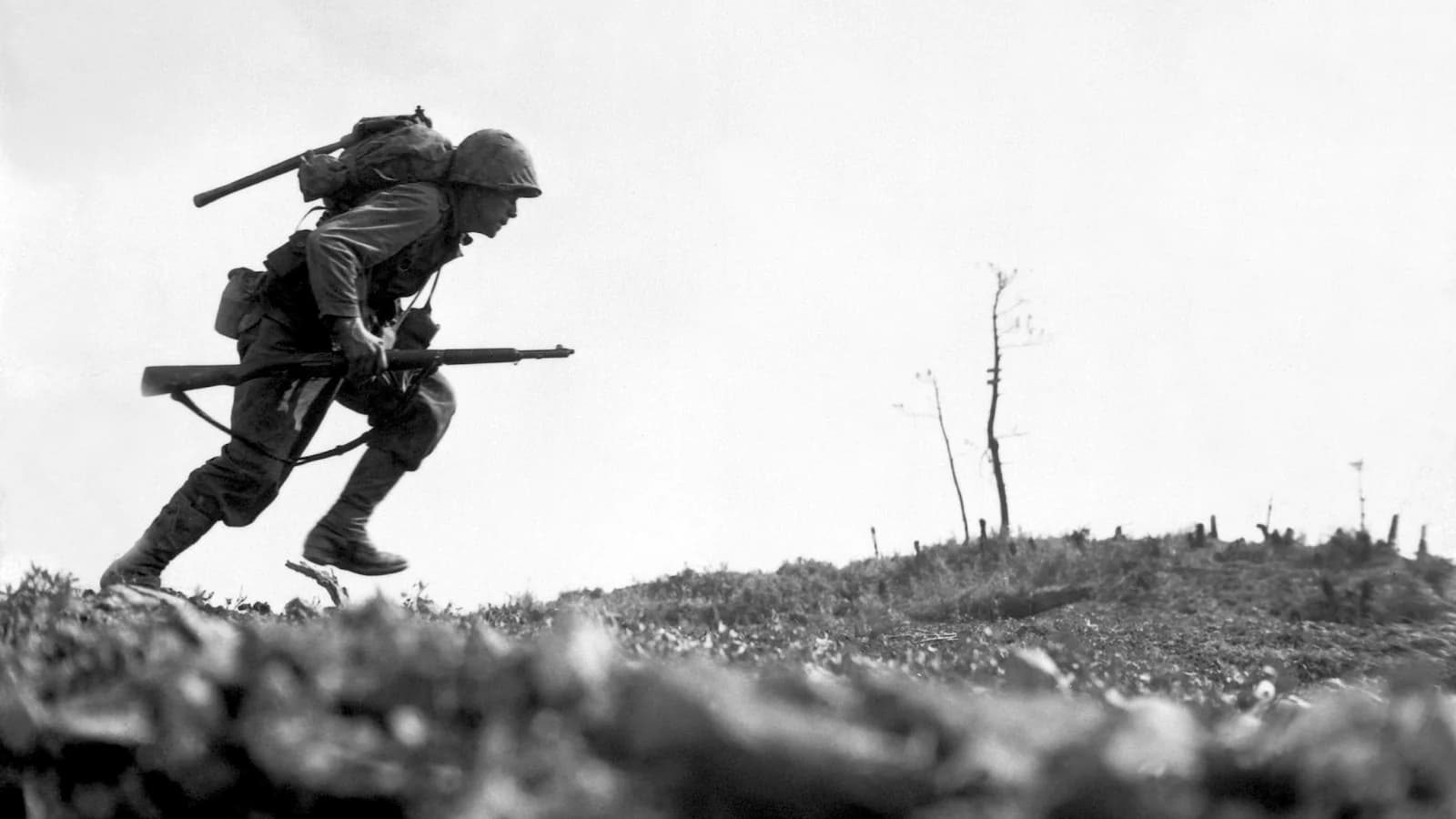
U.S. Marine dashing forward under fire during the brutal Battle of Okinawa, 1945. One of the most iconic images of the Pacific War, capturing the intensity of the final major campaign before the planned invasion of Japan.

Monday, March 1, 2027

  • Breakfast.
  • Drive to LTG Simon Bolivar Buckner Memorial on Maezato Ridge near Itoman.
  • Discuss Japanese penultimate defense line and US attack at a spot near where three senior American leaders were killed, including the 10th Army commander.
  • Drive to the Peace Memorial Park and visit the site of the final Japanese defense, last HQ of the Japanese High Command, and final assaults by the US 7th Infantry Division.
  • After final discussion on the ridge overlooking the Pacific, time on your own to visit the various memorials and world-class museum.
  • Lunch on your own at the museum.
  • Return to lodgings and late afternoon/evening on your own to explore.
  • Dinner on your own.
  • Hotel: Hilton Chatan Resort.
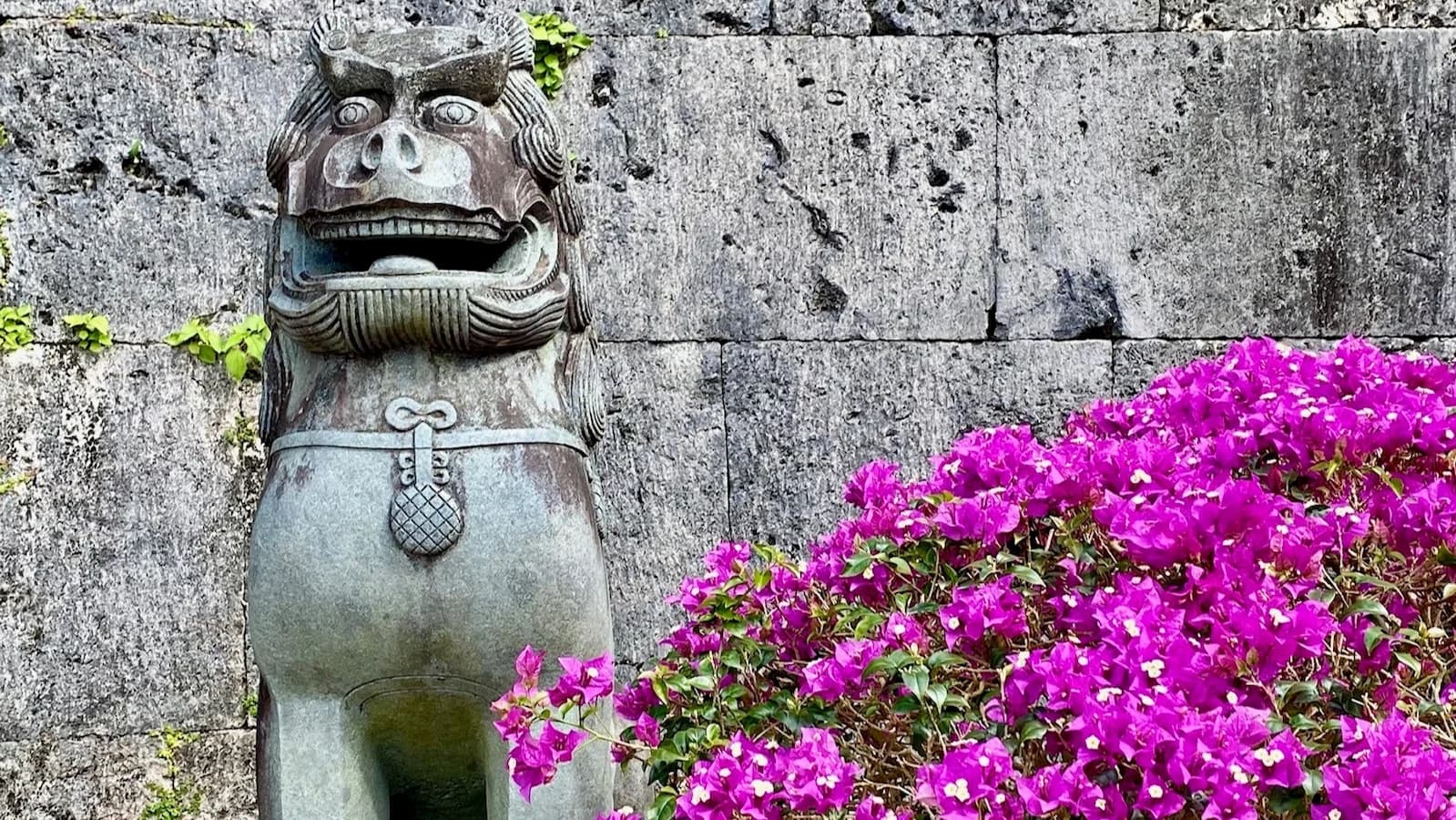
Colorful Shisa statue and blooming bougainvillea against traditional stonework in Okinawa. A peaceful cultural image from the island that saw one of the bloodiest battles of World War II.

Tuesday, March 2, 2027

  • Breakfast.
  • Morning and lunch on your own.
  • Check-out and depart lodgings for Naha International Airport.
  • Afternoon flight to Hiroshima.
  • Bus to lodgings in downtown Hiroshima and check-in.
  • Final group dinner.
  • Hotel: Sheraton Grand Hiroshima.
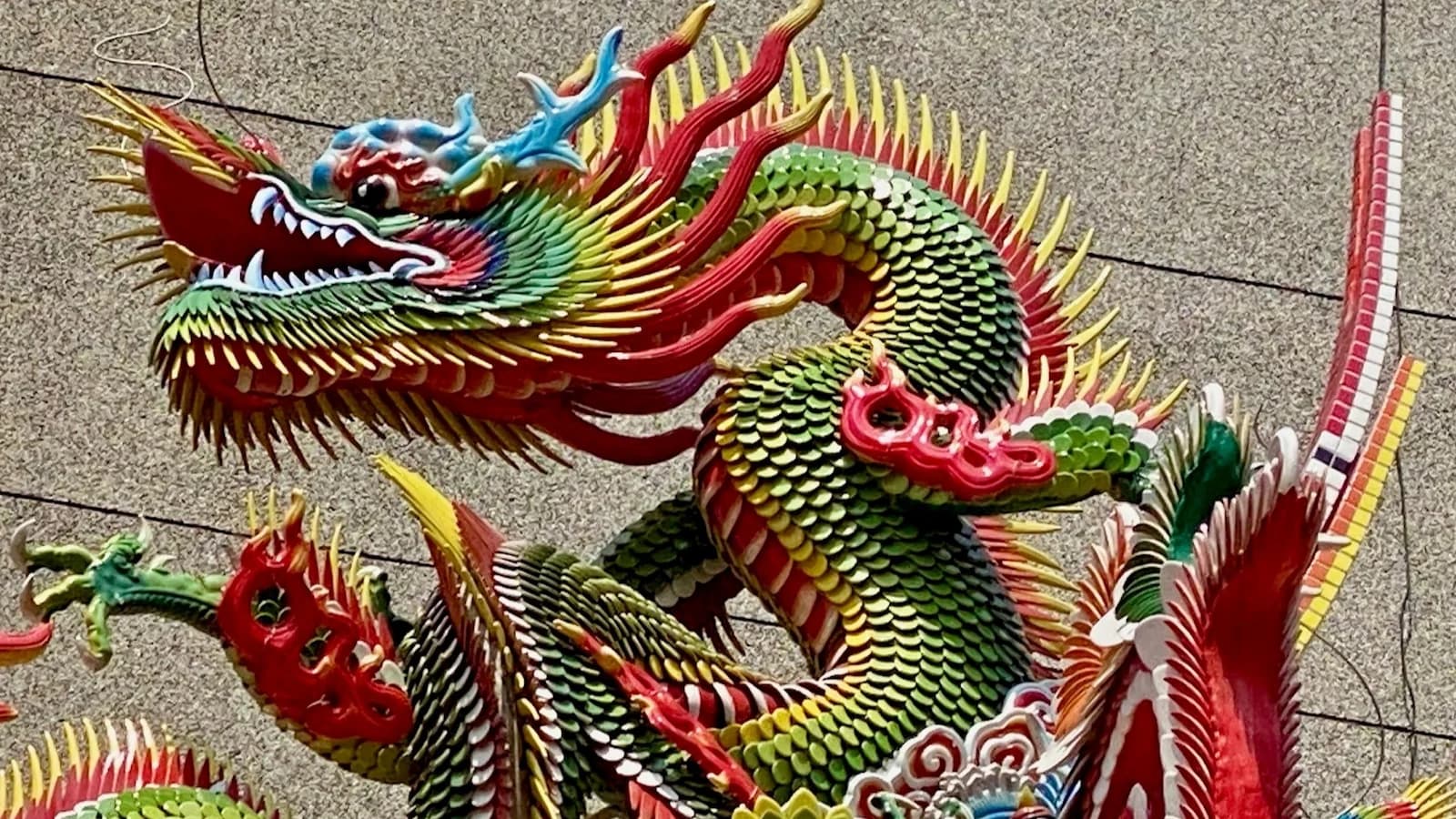
Vibrant traditional Japanese dragon figure, a symbol of power and good fortune. A colorful cultural welcome upon arrival in Japan at the conclusion of our Pearl Harbor to Hiroshima Pacific War expedition.

Wednesday, March 3, 2027

  • Breakfast.
  • Check-out of lodgings.
  • Bus to Hiroshima Peace Memorial Museum and Park.
  • Visit the incredible museum as well as the nearby sites of the epicenter of the atomic bombing on August 6, 1945. The dropping of Little Boy, and Fat Man three days later, played a crucial role in Japan’s decision to surrender.
  • The surrender occurred September 2nd aboard the USS Missouri in Tokyo Bay.
  • We then take the Shinkansen bullet-train on a 3 hour, 200 mph trip to Tokyo Central Station, arriving by 4:30 pm.
  • It is a 20-30 minute cab or uber ride from the station to Hadena International Airport. Many flights to the US depart between 7 and 9 pm.
  • End of the expedition and onward journeys or a longer stay in Japan.
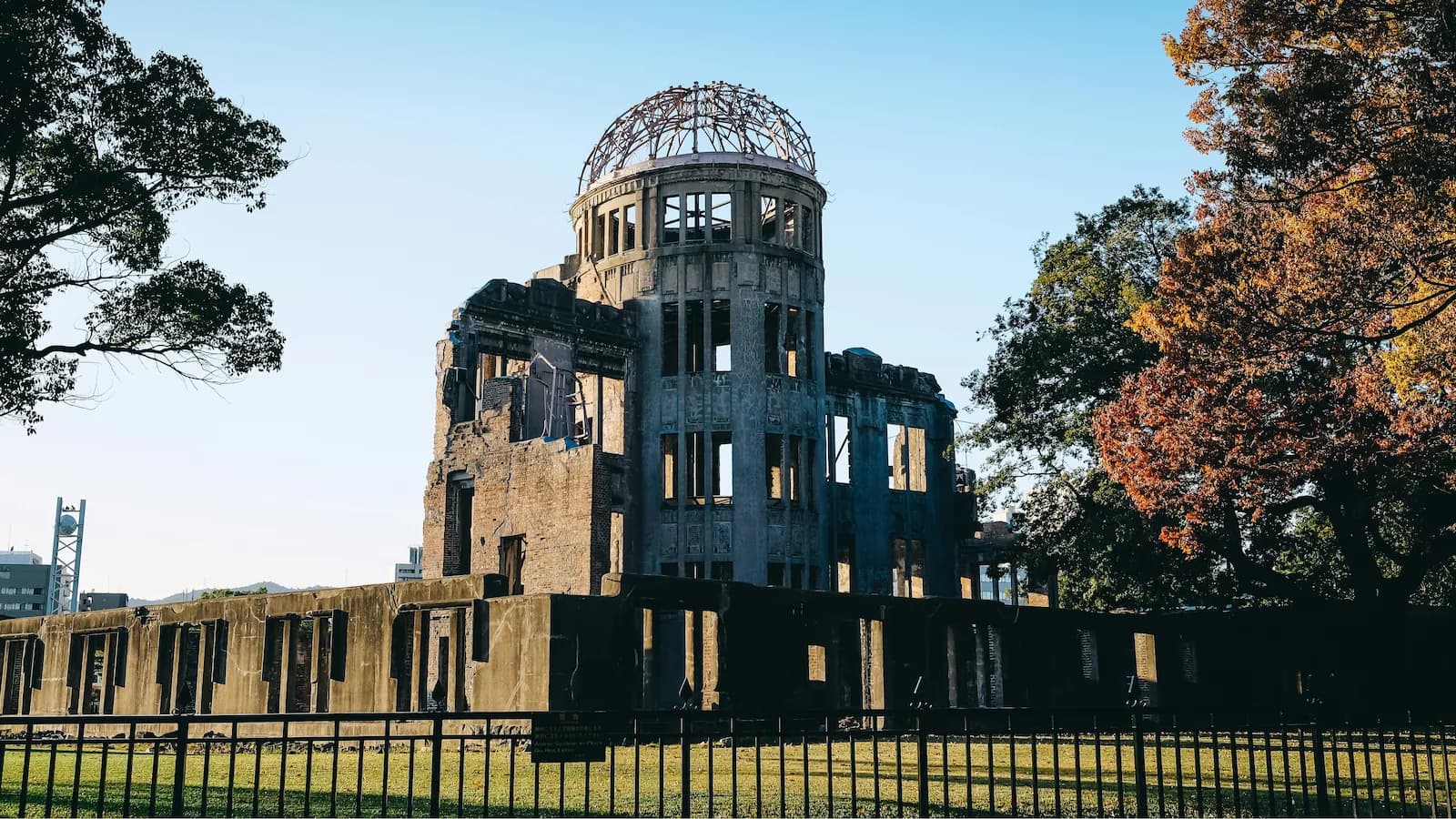
The skeletal ruins of the Atomic Bomb Dome in Hiroshima, the final stop on our journey from Pearl Harbor. The image shows the crumbling brick and exposed iron dome of the former Industrial Promotion Hall, preserved as a permanent memorial to the victims of the August 6, 1945, bombing that ended the Pacific War.