
Arrival – Ho Chi Minh City or Saigon?
Up the Coast
Back to the Central Coast – Danang, Le Ly and Hoi An
Hue and the DMZ
Halong Bay and Hanoi
Coming Home and Final Thoughts
We first visited Vietnam in 2017, nine years ago. Since then, we have led four trips for Essential History Expeditions guests, most recently in March 2026, and have two upcoming expeditions – in February 2028 and February 2030. We have been so very fortunate to have had Vietnam veterans and their spouses or children on each of them. Other guests had fathers, uncles or cousins who served there. Also, we have had guests with no personal tie to the country, but who wished to experience its culture, beauty and history. Because that is what this trip is all about.
In this blog, we are going back to the beginning, to show what we first saw and felt on that very first trip. Because it still animates us to this day and is the beating heart of our expeditions.
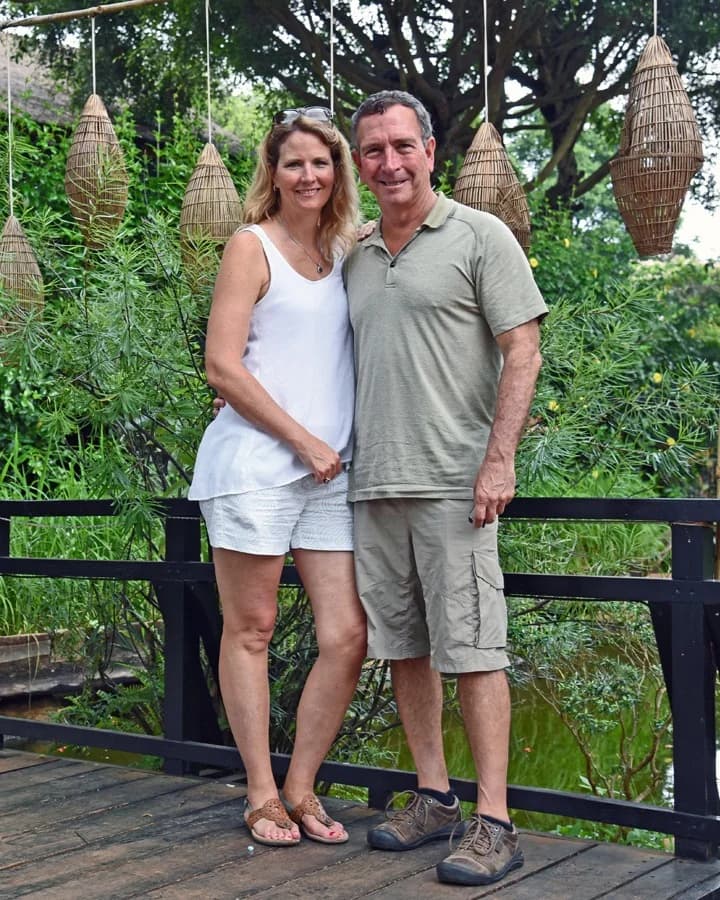
Vietnam. The word itself conjures up so many images, so many memories for my wife and me. It was associated so deeply with our youth. I was born in 1962 on an Army camp on Okinawa and Sheryl a few years later on an air base in New Jersey. We came of age, of awareness, with the conflict in Vietnam on our televisions and in discussions in our homes, schools and communities.
Each of our fathers was career military. My father, Master Sgt. Robert DeToy, had joined as a seventeen-year old in 1951 and had served as an infantryman in the Korean War. Later, he transferred to the Signal Corps. Sheryl’s father, Lt. Col. James L. Rankin, had graduated from Texas A&M in 1958 and became both a pilot and weather officer. Eventually, they would each serve two tours of duty in Vietnam, both in 1962 and my father in 1968-69 and Sheryl’s father in 1969-70.
In the past few years, we have traveled extensively across the United States, Europe, the Caribbean basin and elsewhere. One place high on our list to visit was southeast Asia. The history, culture, natural beauty and ties to our fathers’ service were more than intriguing. They were a calling. And in May 2017 we made them a reality.
As a retired Army officer and professor and an expert historian, I had extensive knowledge on the actions in Vietnam. Sheryl possessed probably an average knowledge of the Vietnam War for someone of our generation with a father who had served. We were both deeply moved by our time in Vietnam – moved not only by the beauty of the country and the warmth of the people but also by the privilege of better understanding our fathers’ experiences, of tracing our fathers’ footsteps.
We landed in Ho Chi Minh City, arriving at the vast Tan Son Nhat International Airport, which still maintains its SGN designator. In fact, most everyone still calls the city “Saigon”, except for official state business.
After checking in to our hotel, just two blocks away from Dong Khoi Stret (the famed old Rue Catinat), we excitedly began our exploration. Over the next two nights and a day we walked the city’s central district and saw so many famous sites from the war – from the Presidential Palace (now a museum known as Reunification Palace), to the old CIA headquarters where the well-known 1975 helicopter evacuation photo was taken (and not atop the Embassy as most believe), to journalists’ hotels like the Caravelle, the Continental (where Graham Greene wrote and set The Quiet American) and the Rex where the ‘Five O’Clock Follies’ press briefings were held. The American Consulate (as the Embassy is now in Hanoi) is new and stands where the old embassy had. Colorful posters, by a Vietnamese-American artist, adorned its walls and expressed the friendship and cooperation of the two nations today. In fact, that was a theme we discovered during this adventure – the Vietnamese generally like and appreciate Americans.
We also saw gorgeous colonial architecture including the City Hall, Notre Dame Cathedral and the Central Post Office with its ornate maps. The Ben Thanh Market and War Remnants Museum were also on the docket. While walking the streets, quaint and busy, I imagined my father on his second tour as much of it was spent in Saigon. Sheryl’s father also served on the 7th Air Force staff out at Tan Son Nhut as the gunship tactics officer. It is truly wondrous to feel oneself in the same places, far across the ocean, as our fathers some fifty years previous.
While I toured the city and visited the tunnel system in the Iron Triangle’s Cu Chi district, Sheryl traveled out into the Mekong Delta and visited the Ap Bac battle site and took canoes and other small boats down the rivers and canals to exotic markets and riverside cafes. Sheryl returned from her day feeling the Mekong to be a very special and idiosyncratic part of the country.
Departing Saigon and heading north, we stopped for a quick visit at the gates of Bien Hoa airbase, which is now a Vietnamese military base. Sheryl’s father had also flown out of here. Next, we passed the sprawling American naval and air base at Camranh Bay, just south of Nha Trang, and observed a tremendous amount of building going on as many brand-name hotel conglomerates were taking up residence on this Vietnam Riviera.
We spent a wonderful night in Nha Trang, a large, lively city with miles of perfect beach and ocean water. We woke early to catch the morning light for pictures of fishing sampans and found, to our delight, thousands of locals out at 6 AM doing morning calisthenics, individually and in groups large and small. Throughout Vietnam we found the government provides plentiful exercise equipment in city parks, beach fronts, etc and the people make extensive use of them. In Hanoi, we joined in each day at the very colorful Louis Pasteur park!
Driving further along the coast, we stopped in at Tuy Hoa. Sheryl’s father had flown AC-119s out of the American air base here in the autumn of 1969, providing close air support of ground operations along the central coast. A brand-new Vietnamese airport is there now, but the old American control tower still stands, near to the larger, modern one.
From Pleiku we took a flight to Danang and were amazed at the dynamism of this growing city, third largest in the country. The gleaming airport sits atop the old American Phu Cat base and many buildings survive from that era. We visited nearby beaches, RED and China. At the former, on the Bay side, the first US combat troops, Marines, came ashore in March 1965. The waves quietly lap the sand today, beneath the trees. On the other, Ocean side, lies Chine Beach, with its gorgeous white-sand curve, much of which was and R&R area back during the war and the site of the famed TV series of the same name, starring Dana Delany.
The most delightful part of the whole trip occurred next, when we met privately with famed author-philanthropist Le Ly Hayslip. Her autobiographical work, When Heaven and Earth Changed Places, was made into the final film in Oliver Stone’s Vietnam War trilogy and starred Tommy Lee Jones among others. Le Ly is just shy of 70 but spry as a teenager. She has lived in California since the early 70s but has been returning to Vietnam annually since the late 80s. The youngest child of a poor farm family outside of Danang, Le Ly grew up during the wars. Her brothers and many friends were supporters of the North Vietnamese and served in the NVA or Viet Cong. As a teenager, Le Ly herself was forced to work for both sides – North and South.
Today, her Global Village foundation runs several critical services in Danang, including an orphanage, a dental office and a school. We visited her at her ancestral family home, where an older brother and sister still live. Le Ly welcomed us and invited some neighbors over for a luncheon, including the mayor of the village. A childhood friend of Le Ly, he also served in the VC and was imprisoned in a Tiger Cage by the South on the notorious Cong Dao Island. Over the delightful meal, sitting in the open backyard amidst the family temples, I asked the people questions about the war and Vietnam today. Our young local Vietnamese guide, Nhu Lanh, was in tears as she heard these stories for the first time. An amazing experience for us all.
We then drove south about 20 kilometers, past China Beach, to the beautiful town of Hoi An.
If you imagine this -- women in the traditional ao dai dresses, incense burning in quaint buddhist temples, streets so small they are really just pedestrian alleyways, lanterns lit at dusk that light both the town and its river, and a majestic white-sand beach – then you are imagining Hoi An. It is the Vietnam we picture. We shopped, visited ancient temples and wooden Chinese bridges, relaxed on the pristine beach, ate extremely well, and investigated every winding street and local pagoda. Magical.
After two nights in Hoi An we drove north along the coast, back past Danang and on to Hue. It is a stupendous drive with incredible vistas; as is, by the way, most of the coastal route Highway 1 in the south. There are tremendous views around almost every corner.
We spent two nights in Hue and on the first day visited The Citadel. Home to Vietnam’s monarchy in the 19th and early 20th centuries, this was also the scene of some of the toughest fighting in the war – the urban combat of Tet 1968. One really gets a feel for the desperate combat as many parts of The Citadel remain shattered. The contrast between the majesty and power of the untouched portions of The Citadel to the destruction of the jagged walls, with stones still strewn nearby, was sobering.
The next day we headed up the coast toward the old Demilitarized Zone (DMZ), a 30 mile wide border area that stretched from the sea to the Laotian border and ostensibly was a no-contact area. In fact, it was hotly contested throughout the war. We drove up to Dong Ha, scene of the famed Marine Captain John Ripley’s singularly heroic exploits in the Easter Offensive of 1972, and then headed west passed the Marine outpost known as The Rockpile to the mountaintop of Khe Sanh, where surrounded US Marines held out against weeks of intense North Vietnamese attacks. As a memorial to the relentless struggle during Tet at Khe Sanh, the Vietnamese have established a rather single-perspective museum and artifacts (US helicopters, vehicles, weapons). While reminded of the struggle of the past, the views on the hilltop today are simply magnificent. In the DMZ region we also visited the nearly 2,000 meter long tunnel system at Vinh Moc. Extensive, like those at Cu Chi, these are more accessible to walk through and examine, and bear testament to the determination of the Vietnamese to survive and win against great odds.
We explored a Vietnamese military cemetery enroute back to Hue. It was surprising, although it should not have been, to find that all the burials were of North Vietnamese and Viet Cong soldiers. The defeated South Vietnamese are buried in family plots or local cemeteries but are not commemorated in the national cemeteries. Ever thus is a civil war, I reflected.
In the morning, we flew from Hue’s airport, formerly the American Phu Bai base and soon landed in Hanoi and drove east to Halong Bay.
It is difficult to do justice to the ethereal beauty that is Halong Bay. It is a UNESCO World Heritage site and rightly so. Its dramatic, jagged karst islands, by the thousands, rise out of the emerald water like so many twists of the dragon’s back. We took a chartered boat out onto the water and sailed past hundreds of the little islands, eventually halting at one and touring through a beautiful limestone cave. Back on the boat we continued our sail and eventually returned to dock. Some boats stay out for a night or two on the waters. Next time we will do that, as well. The word serene fits Halong perfectly.
Back in Hanoi the next day we checked into our hotel, the majestic colonial Sofitel Metropole, on the edge between the French and Old Quarters. This was a perfect location from which to explore the city on foot, and we did just that over the next two days. We visited art and literary museums, governmental buildings from French colonial days, the site where Lieutenant Commander John McCain was captured and the infamous Hanoi Hilton prison complex where he and so many other Americans were held. It is jarring, the first time, to realize this prison sits squarely in the very heart of the city and is not out in the outskirt paddies. We also walked the beautiful boulevards of the French Quarter with its imposing St Joseph’s cathedral, and the tight, energetic streets of the Old Quarter and its famed market. Hanoi is a beautiful city of parks and markets and tree-lined streets, and stands in contrast to the brash young consumerism of Saigon. Both cities have amazing energy and a focus on the future while preserving the past.
Finally, our Vietnam expedition had come to an end, and we made our way back home with comfortable flights to Tokyo and on to Denver. It had been an amazing two-week journey, filled with emotions and excitement. It is not every time that a place meets or exceeds the very high hopes one has for it. Vietnam most certainly exceeded our fondest hopes and expectations. The natural beauty of the land and sea, the incredibly warm and gracious people, and the historical sites of the centuries – all of these made our trip so very worthwhile.
Traveling this land, this place that so filled our lives and those of our families, was an incredible privilege. Vietnam had been wracked by near constant warfare from 1945-75, with millions of lives lost and a landscape transformed. Yet, the Vietnamese today are focused on the future and do not dwell upon the past. They are genuinely happy to see and share their country with Americans. To see with our eyes this amazing land, this spirit of reconciliation, accompanied throughout by the ghosts of our fathers, is what made this a trip of a lifetime.
We encourage veterans like our fathers and children of veterans, like us, to travel this beautiful country, to witness firsthand the reconciliation of the past, and to glimpse that past – and our fathers’ footsteps – through the lens of peace.
Do you want to hear more about:
• Great history and culture?
• New expeditions?
• Our recent expeditions?
Get the latest from EHE with our newsletter!